Organic Waste Converter Plant Manufacturers in Pune | Shree Water Tech
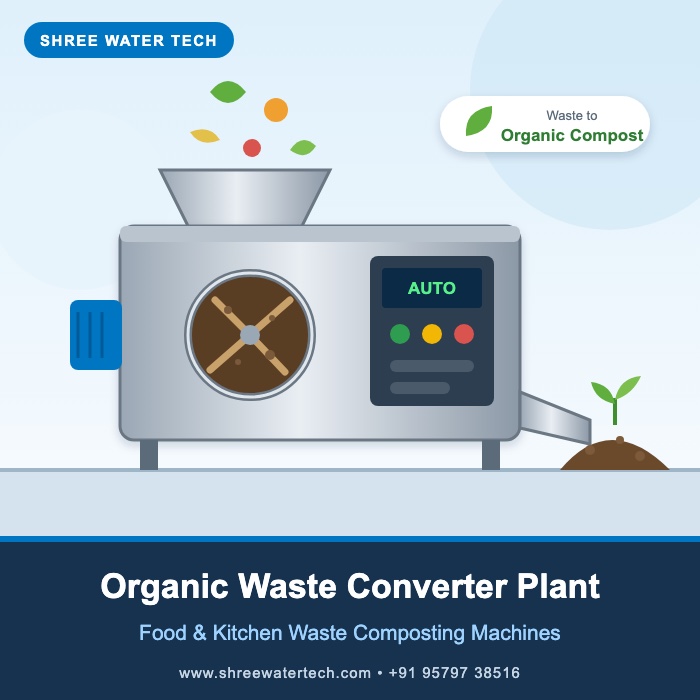


Shree Water Tech is prominent Organic Waste Converter Plant Manufacturers, Suppliers and Exporters in Pune, Maharashtra. We are committed to delivering practical and economical solutions that make organic waste management more efficient and environmentally responsible.
Since 2014, we have been providing customized engineering solutions backed by technical expertise, quality-driven manufacturing, and a customer-focused approach. Our experience across 150+ installations throughout India reflects our ability to handle diverse project requirements with confidence.
We design solutions that balance performance, durability, and budget considerations, helping clients choose the right Organic Waste Converter Plant for their applications. With our focus on reliable Organic Waste Processing Plant solutions and dedicated project support, we strive to create cleaner and more sustainable surroundings.
What Is an Organic Waste Converter Plant and How Does It Support Sustainable Waste Management?
An Organic Waste Converter Plant is an efficient waste-processing system designed to transform biodegradable materials such as vegetable peels, leftover food, fruit waste, and garden waste into compost or stabilized organic material. Using controlled processing techniques and aerobic decomposition, it helps reduce waste volume and promotes responsible waste disposal. This Organic Waste Composting Machine is suitable for residential societies, hotels, restaurants, commercial establishments, and industries, offering a practical solution for managing daily biodegradable waste while supporting sustainable waste management practices.
Working Principle of Organic Waste Converter Plant
The working principle of an Organic Waste Converter Machine involves a series of systematic stages that convert segregated biodegradable waste into compost or stabilized organic material. The process combines mechanical operations and biological decomposition to ensure efficient waste processing. Depending on the plant capacity and configuration, the system may include automatic feeding, shredding, mixing, aeration, and drying arrangements.
- Waste Collection and Segregation: Organic waste is collected from kitchens, canteens, gardens, and other sources, while plastic, metal, glass, and other non-biodegradable materials are separated to ensure smooth processing.
- Waste Feeding: The segregated biodegradable waste is transferred into the processing unit manually or through an Automatic Organic Waste Converter feeding arrangement, depending on the plant design and automation level.
- Shredding and Size Reduction: Large food scraps, vegetable peels, and other organic materials are broken into smaller pieces using a shredding mechanism to support uniform mixing and effective decomposition.
- Moisture and Mixing Control: The shredded waste is mixed properly, and its moisture content is adjusted to create suitable conditions for microbial activity during the composting process.
- Aerobic Decomposition: Air is supplied or circulated through the organic material, allowing beneficial microorganisms to break down biodegradable waste into simpler organic substances.
- Drying and Stabilization: Depending on the configuration, a drying arrangement helps reduce excess moisture and improves the handling and storage of the processed material.
- Screening and Compost Collection: The processed material is screened to remove unwanted particles, and the resulting material is collected for further curing or suitable use as compost.
This systematic process makes the Food Waste Composting Machine a practical solution for handling biodegradable waste at residential, commercial, and industrial facilities while supporting cleaner and more organized waste management.
Types of Organic Waste Converter Plants
As Organic Waste Converter Plant Manufacturers in Pune, Maharashtra, we offer solutions designed to suit different waste processing requirements, operational preferences, and capacity needs across residential, commercial, and industrial applications.
By Operation and Process Type
- Automatic In-Vessel Organic Waste Converter: This enclosed system uses automated shredding, mixing, and aeration arrangements to process biodegradable waste under controlled conditions. It is suitable for facilities requiring convenient operation, reduced manual handling, and consistent processing.
- Batch-Type Organic Waste Converter: This system processes a fixed quantity of organic waste in each operating cycle, making it suitable for restaurants, canteens, and small commercial establishments. It offers a simple approach to managing waste generated at regular intervals.
- Continuous Organic Waste Converter: Designed for ongoing waste feeding and processing, this system handles regular organic waste generation without depending entirely on separate batch cycles. It is ideal for large residential complexes, institutions, and commercial facilities with consistent waste volumes.
- Drum-Type Organic Waste Converter: This system uses a rotating cylindrical drum to mix organic waste and support uniform material movement during processing. Its mechanical mixing arrangement helps improve contact between organic materials and supports the composting process.
- Manual and Semi-Automatic Composting System: These systems use manual handling or basic mechanical equipment for mixing, turning, and managing biodegradable waste. They are suitable for smaller installations where simple operation and economical investment are important.
- Bio-Mechanical Organic Waste Converter: This system combines mechanical waste processing with controlled aeration and microbial activity to support the breakdown of biodegradable materials. It helps improve waste handling while promoting an effective biological composting process.
By Scale and Application
- Small and Portable Organic Waste Converter: These compact units are designed for homes, small offices, and kitchens with limited daily waste generation, typically around 5–20 kg per day. They provide a convenient option for processing biodegradable waste close to its source.
- Commercial and Institutional Organic Waste Converter: A Commercial Organic Waste Converter Plant is designed for hotels, restaurants, hospitals, shopping malls, educational institutions, and housing societies. Depending on the requirement, these systems can handle waste quantities ranging from tens to hundreds of kilograms per day.
- Industrial and Municipal Organic Waste Converter: An Industrial Organic Waste Converter Plant is developed for large-scale waste processing at industrial facilities, townships, food-processing units, and municipal projects. These heavy-duty systems can be customized for capacities ranging from hundreds to thousands of kilograms per day.
- In-Vessel Composting Organic Waste Converter: This system processes biodegradable waste inside an enclosed chamber with controlled mixing, aeration, and moisture management. It is suitable for locations requiring compact installation, hygienic operation, and organized on-site composting.
Technical Specifications of Organic Waste Converter Plant
As Organic Waste Converter Plant Suppliers in Pune, Maharashtra, we focus on providing technically suitable systems with appropriate processing capacities, quality construction, and efficient operating arrangements to meet diverse customer requirements.
| Technical Parameters | Specifications / Details |
|---|---|
| Equipment Name | Organic Waste Converter Plant |
| Processing Capacity | 25–2,000 kg/day; higher capacities available through customized systems |
| Waste Input Material | Food waste, kitchen waste, fruit peels, vegetable waste, and garden waste |
| Processing Technology | Shredding, mixing, moisture control, and aerobic composting |
| Operating System | Batch / Continuous |
| Feeding Arrangement | Manual / Automatic |
| Shredding Mechanism | Single-shaft / Dual-shaft |
| Shredder Motor | 0.5–2 HP, depending on capacity |
| Mixing Arrangement | Mechanical agitator with gearbox |
| Processing Cycle | Around 15 minutes for shredding and mixing |
| Accelerated Processing Cycle | Approximately 24–36 hours for selected models |
| Compost Curing Period | Approximately 10 days or as per process requirements |
| Waste-Contact Material | Stainless Steel SS-304 |
| Chamber Thickness | 1.5–5 mm, depending on design |
| External Structure | Mild Steel with protective coating |
| Heating Arrangement | Ceramic heater / Oil-jacketed heating (optional) |
| Insulation System | Ceramic wool insulation (where applicable) |
| Moisture Management | Drainage, ventilation, and dewatering arrangements |
| Aeration System | Controlled air circulation |
| Power Supply | Single-phase / Three-phase |
| Electrical Configuration | 415 V, three-phase for applicable models |
| Main Drive Motor | As per plant capacity and design |
| Control Panel | Manual / Semi-Automatic / PLC-based |
| Operating Modes | Manual / Automatic |
| Safety Features | Overload protection and safety interlocks |
| Auxiliary Equipment | Bin lifter, curing racks, shredder, and compost sieve |
| Final Output | Processed organic material for curing and composting |
Components of an Organic Waste Converter Plant
An Organic Waste Converter Plant consists of several mechanical and electrical components that work together to ensure smooth waste feeding, size reduction, mixing, and organic waste processing.
- Feeding Chamber: Provides an entry point for segregated biodegradable waste to enter the machine for further processing.
- Shredder / Cutter: Breaks down large organic waste materials into smaller particles for uniform processing and mixing.
- Mixing Chamber: Blends shredded organic materials evenly to support consistent processing and decomposition.
- Motor and Gearbox: Deliver the mechanical power and controlled rotation required to operate the machine components.
- Aeration Arrangement: Maintains oxygen circulation within the organic material to support aerobic microbial activity.
- Moisture Management System: Regulates excess moisture to maintain suitable conditions for effective composting.
- Control Panel: Allows operators to manage electrical functions and monitor the machine's operating processes.
- Discharge Arrangement: Facilitates the smooth removal and collection of processed organic material from the machine.
- Supporting Structure: Provides the necessary strength, stability, and support for the complete equipment assembly.
Key Features of Organic Waste Converter Plant
As Organic Waste Converter Plant Exporters in Pune, Maharashtra, we emphasize practical features, durable construction, convenient operation, and efficient processing to deliver solutions suitable for different waste management applications.
- Efficient Waste Shredding: The integrated shredding mechanism breaks down food scraps, vegetable peels, and other biodegradable materials into smaller particles for easier processing.
- Automated Processing Operation: An Automatic Organic Waste Converter can incorporate automatic feeding, mixing, and control functions to reduce manual handling and simplify daily operations.
- Effective Moisture Management: The integrated moisture-control arrangement helps maintain suitable processing conditions and improves the handling of organic waste.
- Durable Construction: Quality-oriented construction materials and robust mechanical components support reliable operation under regular working conditions.
- Odour Management System: Suitable ventilation and Odour Control arrangements help minimize unpleasant smells and maintain cleaner surroundings around the processing area.
Benefits of Organic Waste Converter Plant
As Organic Waste Converter Plant Manufacturers in Pune, Maharashtra, we aim to provide efficient waste management solutions that help our customers reduce disposal requirements, improve waste handling, and adopt more sustainable practices.
- Reduces Waste Disposal Requirements: Converts biodegradable waste into processed organic material, reducing the quantity of untreated waste requiring external disposal.
- Supports Sustainable Waste Management: Encourages responsible handling of food and kitchen waste while promoting environmentally conscious waste processing practices.
- Helps Generate Useful Compost: Properly processed and cured organic waste can be converted into compost suitable for appropriate soil improvement applications.
- Minimizes Waste Transportation: On-site processing reduces dependence on transporting daily organic waste to distant collection and disposal facilities.
- Improves Workplace Hygiene: Organized waste collection and processing help maintain cleaner surroundings in kitchens, commercial establishments, and residential premises.
Applications of Organic Waste Converter Plant
As Organic Waste Converter Plant Suppliers in Pune, Maharashtra, we cater to diverse application requirements by offering suitable waste processing solutions for residential communities, hospitality facilities, commercial establishments, institutions, and industries.
- Residential Apartments and Housing Societies: An Apartment Organic Waste Converter helps process everyday kitchen waste, vegetable peels, and food leftovers generated by residents.
- Hotels and Resorts: A Hotel Food Waste Converter provides an organized solution for managing food scraps, leftover meals, and biodegradable kitchen waste.
- Restaurants and Commercial Kitchens: A Commercial Kitchen Waste Converter helps process daily food preparation waste and other biodegradable materials generated during kitchen operations.
- Hospitals and Healthcare Facilities: Organic waste processing systems can handle segregated biodegradable waste from hospital kitchens, cafeterias, and food service areas.
- Shopping Malls and Commercial Complexes: A Bulk Waste Composting Machine helps manage food waste generated by food courts, restaurants, and common dining facilities.
- Schools, Colleges and Universities: A Kitchen Waste Composting Machine supports the processing of biodegradable waste generated in institutional kitchens, hostels, and canteens.
- Food Processing Industries: An Industrial Organic Waste Converter Plant helps manage segregated biodegradable production waste, including vegetable scraps and food-processing residues.
- Municipal and Community Facilities: A Community Organic Waste Composting Plant provides a decentralized approach to managing biodegradable waste collected from local residential and public areas.
Why Choose Us?
- Application-Based Engineering: We focus on understanding individual project requirements and recommending suitable waste management solutions based on processing needs, site conditions, and operational expectations.
- Quality and Cost-Conscious Approach: We emphasize quality-oriented equipment selection and economical system configurations to provide dependable solutions without unnecessary investment.
- Experienced Technical Team: With our engineering experience since 2014 and 150+ installations across India, we bring practical project knowledge and technical support to diverse treatment applications.
Shree Water Tech is leading Organic Waste Converter Plant Manufacturers, Suppliers and Exporters in Pune, Maharashtra. We are committed to providing practical and economical solutions that simplify organic waste handling and promote responsible waste management. Through our focus on quality engineering, customized system designs, and dependable performance, we strive to meet the diverse requirements of residential, commercial, and industrial clients while supporting a cleaner and greener future. Reach out to us for additional information.
FAQ’s
The machine processes segregated organic waste through shredding, mixing, moisture management, and controlled decomposition. The processed material is then transferred for curing and further composting, depending on the system design.
It can process biodegradable materials such as leftover food, fruit peels, vegetable scraps, garden waste, and other suitable organic materials. Plastic, glass, metal, and other non-biodegradable materials should be removed before feeding.
Processing capacities vary according to the machine model and application, ranging from small units for residential use to high-capacity systems for commercial and industrial facilities. The suitable capacity is selected based on daily organic waste generation.
Processing time depends on the technology, waste composition, moisture content, and operating conditions. Some machines complete initial processing within hours, while the final compost may require additional curing.
The cost depends on processing capacity, automation level, construction material, equipment configuration, and additional accessories. Installation requirements and customization also influence the overall project cost.
Regular maintenance includes cleaning the processing chamber, inspecting shredding blades, checking motors and electrical components, and maintaining moving parts. Periodic servicing helps ensure smooth operation and equipment reliability.