Top Wastewater Treatment System Manufacturers in Goa | Shree Water Tech
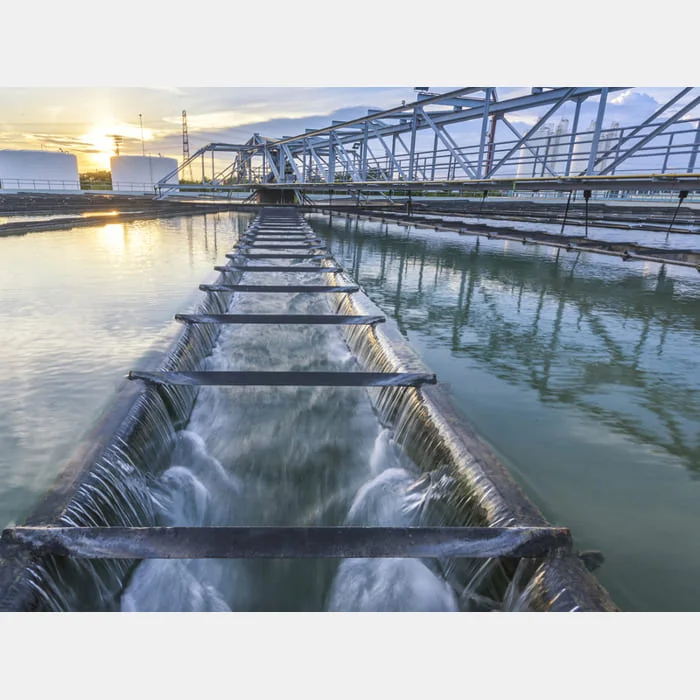


SHREE WATER TECH is leading Wastewater Treatment System Manufacturers, Suppliers and Exporters in India. A Wastewater Treatment System is an engineered solution designed to remove physical, chemical, and biological contaminants from wastewater before discharge, recycling, or reuse. Wastewater can originate from homes, apartments, hotels, hospitals, commercial buildings, municipalities, and industrial facilities.
Modern wastewater treatment combines processes such as screening, biological treatment, clarification, filtration, membrane separation, and disinfection to achieve the required water quality. Depending on the source and treatment objective, systems can be designed as centralized, decentralized, onsite, modular, packaged, portable, or containerized solutions.
What is a Wastewater Treatment System?
A wastewater treatment system is a combination of treatment units and equipment used to reduce pollutants from wastewater. The system is selected according to the wastewater source, flow rate, contaminant concentration, available space, and final water-quality requirements.
Municipal Sewage Treatment Plants (STPs) generally treat domestic sewage, while Industrial Effluent Treatment Plants (ETPs) are designed according to the specific characteristics of industrial effluent.
Other configurations include onsite wastewater treatment systems, decentralized wastewater treatment systems, compact wastewater treatment systems, and large-scale municipal treatment plants.
How Does a Wastewater Treatment System Work?
A typical system moves wastewater through several treatment stages, with each stage targeting a different group of contaminants.
- 1. Preliminary Treatment: Screens and grit-removal equipment capture large solids, plastics, sand, and other materials that could damage pumps or interfere with downstream processes.
- 2. Primary Treatment: Settling allows heavier suspended solids to separate from the wastewater. Floating materials can also be removed during this stage.
- 3. Biological Treatment: Microorganisms consume biodegradable organic matter present in the wastewater. Technologies such as MBBR, SBR, and activated sludge process systems can be used for biological treatment.
- 4. Secondary Solid Separation: Biological solids are separated from the treated-water stream through clarification or membrane filtration.
- 5. Tertiary Treatment: Additional filtration, nutrient reduction, or membrane processes can be incorporated when higher-quality water is required.
- 6. Disinfection: UV, chlorination, or another suitable method can be used to reduce microorganisms before discharge or reuse.
- 7. Water Reuse or Discharge: The treated water can be discharged according to applicable requirements or directed toward suitable non-potable reuse applications.
Types of Wastewater Treatment Systems
As we are leading Wastewater Treatment System Manufacturers in India, our Types are designed to meet different application requirements and industry standards, including the following types:
- Municipal Sewage Treatment Plants: Municipal STPs are designed to treat sewage collected from residential areas, public facilities, commercial properties, and municipal networks.
- Industrial Effluent Treatment Plants: Industrial ETPs are designed according to the contaminants produced by specific manufacturing processes. Treatment may involve physical, chemical, biological, and membrane technologies.
- Decentralized Wastewater Treatment System: A decentralized system treats wastewater close to where it is generated rather than transporting the entire wastewater stream to a distant centralized facility.
- Onsite Wastewater Treatment System: Onsite systems are installed at or near individual properties or facilities. Examples include appropriately designed septic systems and advanced biological treatment units.
- Small-Scale Wastewater Treatment Plant: Small systems are suitable for homes, small communities, institutions, offices, and facilities with relatively limited wastewater generation.
- Compact and Modular Systems: Compact and modular wastewater treatment plants combine treatment equipment into space-efficient configurations. They can be expanded or adapted according to project requirements.
- Packaged Wastewater Treatment Plant: A packaged system consists of pre-engineered treatment units supplied as an integrated package, helping simplify installation and commissioning.
- Containerized Wastewater Treatment Plant: Containerized systems house treatment equipment inside suitable containers and can be useful for remote, temporary, or space-constrained projects.
- Portable Wastewater Treatment System: Portable systems are designed for applications where wastewater treatment equipment may need to be moved between locations.
Major Components of a Wastewater Treatment System
Depending on the application, a system may contain:
- Inlet screening system
- Grit-removal equipment
- Equalization tank
- Feed and transfer pumps
- Primary settling system
- Biological reactor
- MBBR media
- Aeration blowers
- Fine-bubble diffusers
- Secondary clarifier
- Membrane modules
- Pressure Sand Filter
- Activated Carbon Filter
- Chemical dosing system
- Disinfection unit
- Sludge-handling equipment
- Treated-water storage tank
- Flow meters
- Level sensors
- Pressure instruments
- Electrical control panel
- PLC automation system
The final equipment arrangement depends on wastewater characteristics and treatment objectives.
Technical Specifications of Wastewater Treatment System
As a trusted Wastewater Treatment System Suppliers in India, we serve businesses across various industries that meet professional visual communication requirements.
| Category | Technical Parameter | Specification | Unit | Typical Value / Range |
|---|---|---|---|---|
| System | Treatment Type | Wastewater Treatment System | — | Municipal / Industrial / Commercial |
| Capacity | Treatment Capacity | Hydraulic Capacity | KLD | 10–5,000 |
| Equalization | Equalization Tank | Hydraulic Retention Time | hr | 2–12 |
| Primary | Primary Clarifier | Surface Loading Rate | m³/m²/day | 20–40 |
| Biological | Treatment Technology | Biological Process | — | MBBR / SBR / MBR / ASP |
| Biological | MLSS | Mixed Liquor Suspended Solids | mg/L | 2,000–6,000 |
| Biological | DO | Dissolved Oxygen | mg/L | 1.5–3.0 |
| Biological | F/M Ratio | Organic Loading | kg BOD/kg MLSS•day | 0.10–0.30 |
| Biological | Aeration HRT | Biological Retention Time | hr | 4–12 |
| MBBR | Media Filling Ratio | Carrier Media Volume | % | 40–60 |
| MBBR | Media Surface Area | Specific Surface Area | m²/m³ | 300–650 |
| SBR | Cycle Time | Batch Treatment Cycle | hr | 4–8 |
| SBR | Settling Time | Solid Separation | min | 30–90 |
| MBR | Membrane Type | Membrane Configuration | — | Hollow Fibre / Flat Sheet |
| MBR | Membrane Pore Size | UF Membrane | micron | 0.01–0.1 |
| Aeration | Blower Pressure | Air Supply Pressure | bar | 0.3–0.6 |
| Aeration | Diffuser | Fine Bubble Diffuser | — | EPDM / Silicone |
| Pumping | Transfer Pump | Flow Rate | m³/hr | 0.5–250 |
| Pumping | Pump Head | Total Dynamic Head | mWC | 10–40 |
| Piping | Process Piping | Nominal Diameter | mm | 25–300 |
Features and Benefits of Wastewater Treatment System
As Wastewater Treatment System Exporters in India, our products provide several Features and Benefits including consistent quality, smooth finish, and long service life.
| Category | Feature | Benefit |
|---|---|---|
| Treatment | Multi-stage process | Provides comprehensive contaminant reduction |
| Design | Modular configuration | Supports different project requirements |
| Footprint | Compact options available | Useful where space is limited |
| Technology | MBBR / SBR / MBR options | Allows application-specific process selection |
| Automation | PLC-based control | Simplifies monitoring and operation |
| Reuse | Water recycling capability | Supports conservation of freshwater |
| Deployment | Packaged and containerized options | Simplifies installation |
| Scalability | Modular expansion | Accommodates changing requirements |
| Maintenance | Integrated equipment arrangement | Facilitates servicing |
| Sustainability | Water reuse and recovery | Helps reduce wastewater discharge |
Applications of Wastewater Treatment System
As Wastewater Treatment System Manufacturers in India, our all types are used in various types of industrial sectors such as:
- Residential and Domestic: Systems can be used for homes, apartments, residential buildings, housing communities, and decentralized developments.
- Hotels and Hospitality: Hotels, resorts, restaurants, and tourism facilities can treat wastewater generated from accommodation, sanitation, kitchens, and other operations.
- Hospitals: Healthcare facilities can use appropriately designed wastewater treatment systems for sewage generated from wards, offices, sanitation facilities, and other domestic sources.
- Commercial Buildings: Shopping complexes, offices, business parks, institutions, and commercial buildings can use compact systems for onsite wastewater management.
- Industrial Facilities: Industrial wastewater treatment systems can be designed for manufacturing facilities based on their specific wastewater composition and production processes.
- Municipalities: Large-scale treatment systems can serve communities and municipal wastewater networks where centralized treatment is required.
- Remote and Offsite Locations: Portable, modular, and containerized configurations are useful for construction sites, remote facilities, temporary camps, infrastructure projects, and locations without centralized sewerage infrastructure.
Wastewater Treatment System Capacity
Capacity is determined according to the expected wastewater flow rather than selecting equipment solely by plant type.
Important design parameters include:
- Average daily flow
- Peak flow
- Number of users
- Industrial production rate
- BOD loading
- COD loading
- TSS concentration
- Hydraulic retention time
- Required operating hours
- Future expansion
Domestic systems are commonly sized according to population and estimated sewage generation, while industrial systems require detailed process-water and effluent data.
MBBR vs. SBR: Which is better?
Neither MBBR nor SBR is universally better. The appropriate technology depends on the application's hydraulic conditions, wastewater characteristics, available area, automation requirements, operating pattern, and treated-water objectives.
MBBR uses attached-growth microorganisms supported on carrier media and can provide a compact biological treatment configuration.
SBR operates biological treatment in controlled cycles within a reactor, combining treatment and settling functions within the batch process.
Technology selection should therefore be based on engineering evaluation rather than simply choosing one technology for every application.
Factors to Consider When Selecting a Wastewater Treatment System
Before selecting a system, consider:
- Wastewater source
- Flow rate
- Peak hydraulic load
- BOD and COD
- Suspended solids
- pH and temperature
- Oil and grease
- Available installation area
- Required treated-water quality
- Water reuse objectives
- Power availability
- Sludge-management requirements
- Automation level
- Future expansion
- Operating and maintenance requirements
For industrial applications, representative wastewater sampling and laboratory analysis are particularly important.
Wastewater Treatment System Cost
The cost depends on treatment capacity, wastewater characteristics, selected technology, equipment specifications, construction materials, automation, filtration, disinfection, installation, and commissioning.
A small domestic system has significantly different equipment requirements from a large municipal or industrial installation.
Project costs may include:
- Treatment tanks
- Pumps
- Blowers
- Biological treatment equipment
- Clarifiers or membranes
- Filters
- Chemical dosing systems
- Disinfection equipment
- Electrical panels
- PLC controls
- Piping and valves
- Instrumentation
- Installation
- Commissioning
Operating costs should also be considered, including electricity, chemicals, consumables, maintenance, and sludge management.
Installation & Maintenance
Installation requirements depend on whether the system is onsite, modular, packaged, skid-mounted, or containerized.
The installation process generally involves site preparation, equipment positioning, piping connections, electrical connections, instrumentation, testing, and commissioning.
Routine maintenance includes:
- Cleaning screens
- Inspecting pumps
- Checking blowers
- Monitoring biological treatment
- Inspecting valves
- Cleaning filters
- Checking membrane performance, where applicable
- Monitoring treated-water quality
- Removing excess sludge
- Checking electrical systems
- Calibrating instruments
Preventive maintenance helps maintain consistent treatment performance and equipment reliability.
Why Choose Our Wastewater Treatment System?
- Customized Wastewater Treatment Solutions: We design Wastewater Treatment Systems according to wastewater characteristics, flow requirements, treatment objectives, and site conditions. Solutions can be developed for domestic, commercial, municipal, and industrial applications.
- Advanced Treatment Technologies: Our systems can incorporate MBBR, SBR, MBR, activated sludge, membrane filtration, and other proven processes based on the required treatment performance. The technology selection is matched to wastewater quality and operational requirements.
- Application-Specific Process Design: Every wastewater stream has different organic loads, suspended solids, chemical characteristics, and reuse objectives. We develop process configurations based on parameters such as BOD, COD, TSS, pH, flow variation, and required effluent quality.
- Efficient Water Recycling & Reuse: Where water conservation is important, treated wastewater can be further processed for recycling and reuse. Additional filtration, membrane treatment, or disinfection stages can be incorporated according to the intended reuse application.
- Integrated RO & UF Solutions: Our wastewater treatment systems can be integrated with Ultrafiltration (UF) and Reverse Osmosis (RO) for applications requiring higher-quality treated water. These membrane processes can support water recovery and reuse strategies.
SHREE WATER TECH is leading Wastewater Treatment System Manufacturers, Suppliers and Exporters in India. A Wastewater Treatment System provides an engineered method for managing wastewater from domestic, commercial, municipal, and industrial sources. By combining physical, biological, chemical, and membrane-based processes, the system can reduce pollutants and prepare treated water for appropriate discharge or reuse. The right configuration depends on wastewater characteristics, treatment objectives, available space, capacity, operating conditions, and future requirements. Contact us today for a customized wastewater treatment solution, technical consultation, wastewater assessment, and project quotation.
FAQ's
A wastewater treatment system is an engineered combination of processes and equipment used to remove contaminants from wastewater before discharge, recycling, or reuse.
An STP generally refers to a sewage treatment plant designed primarily for domestic sewage, while WWTP (Wastewater Treatment Plant) is a broader term that can include treatment facilities for municipal sewage as well as other wastewater streams.
A representative seven-stage sequence is preliminary treatment, primary treatment, biological treatment, secondary solid separation, tertiary treatment, disinfection, and treated-water discharge or reuse. Actual processes vary by application.
Neither is universally better. SBR is based on batch-cycle operation, while MBBR uses attached-growth carrier media. The selection depends on flow, space, automation, wastewater characteristics, and treatment requirements.
Yes. Appropriately treated wastewater can be reused for suitable non-potable applications such as flushing, landscaping, irrigation, cooling, or industrial processes, subject to water-quality requirements and applicable regulations.