Top 10 Reverse Osmosis Plant Manufacturers in Pune
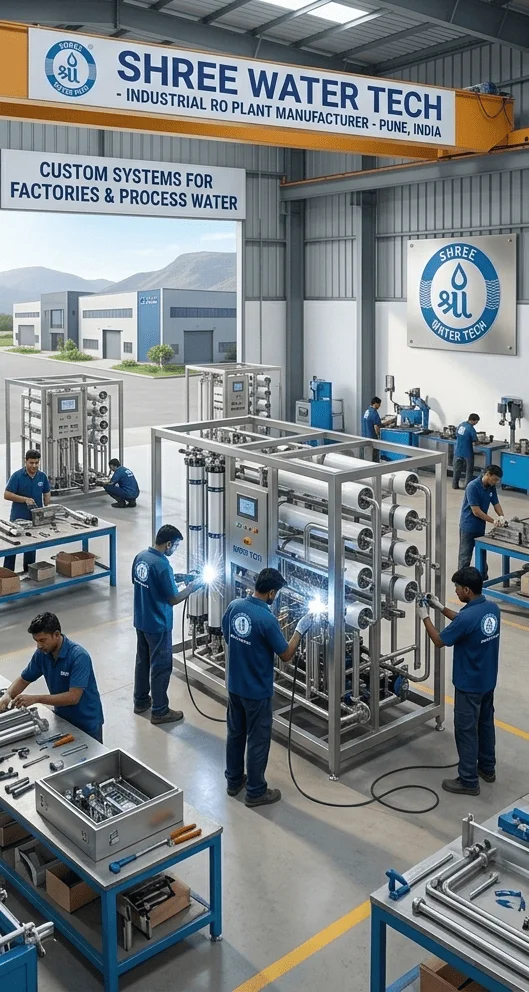
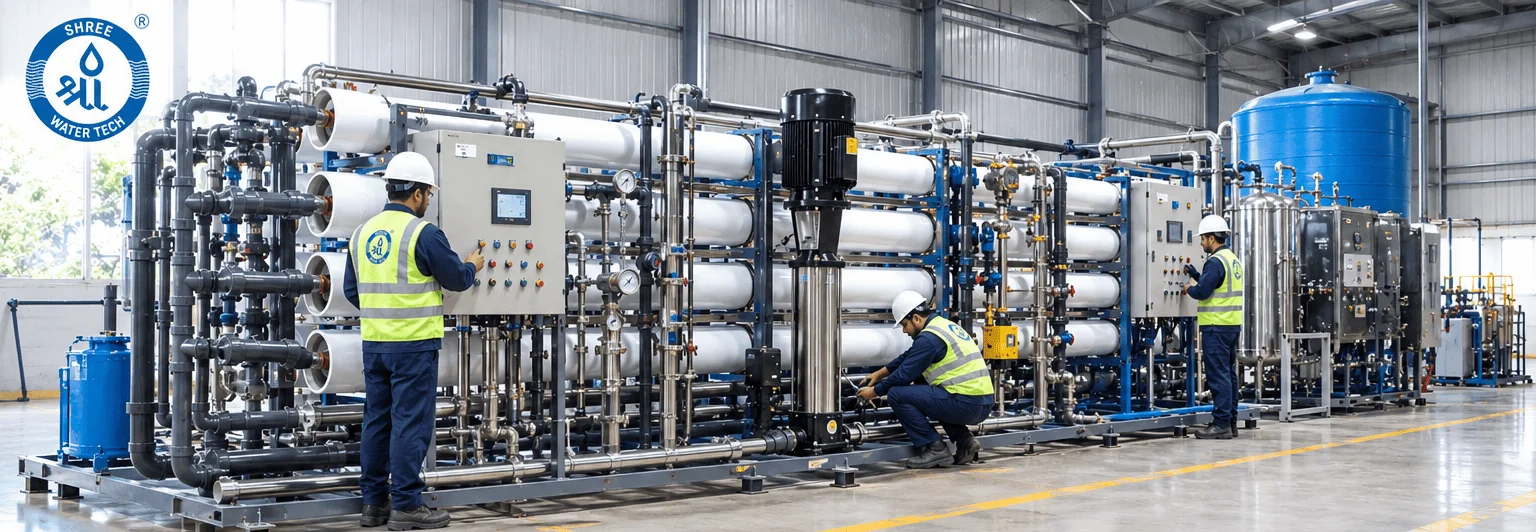
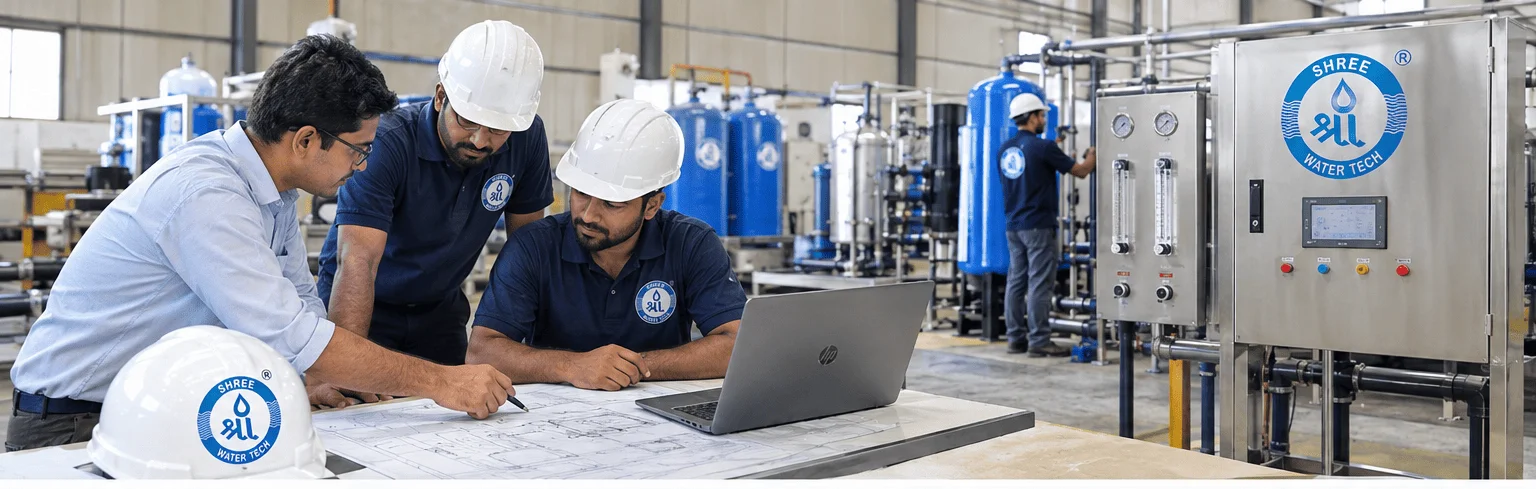
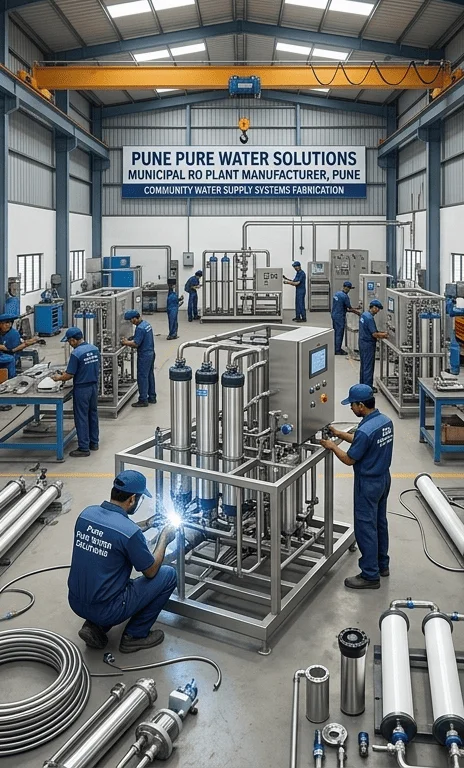
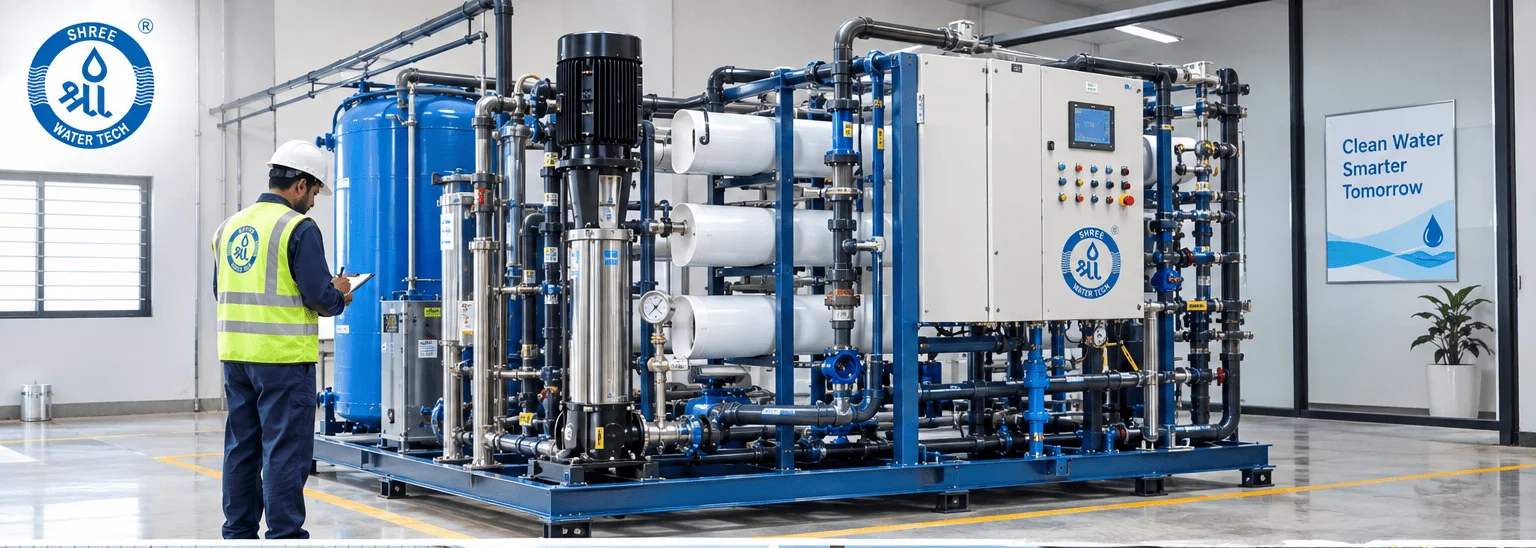
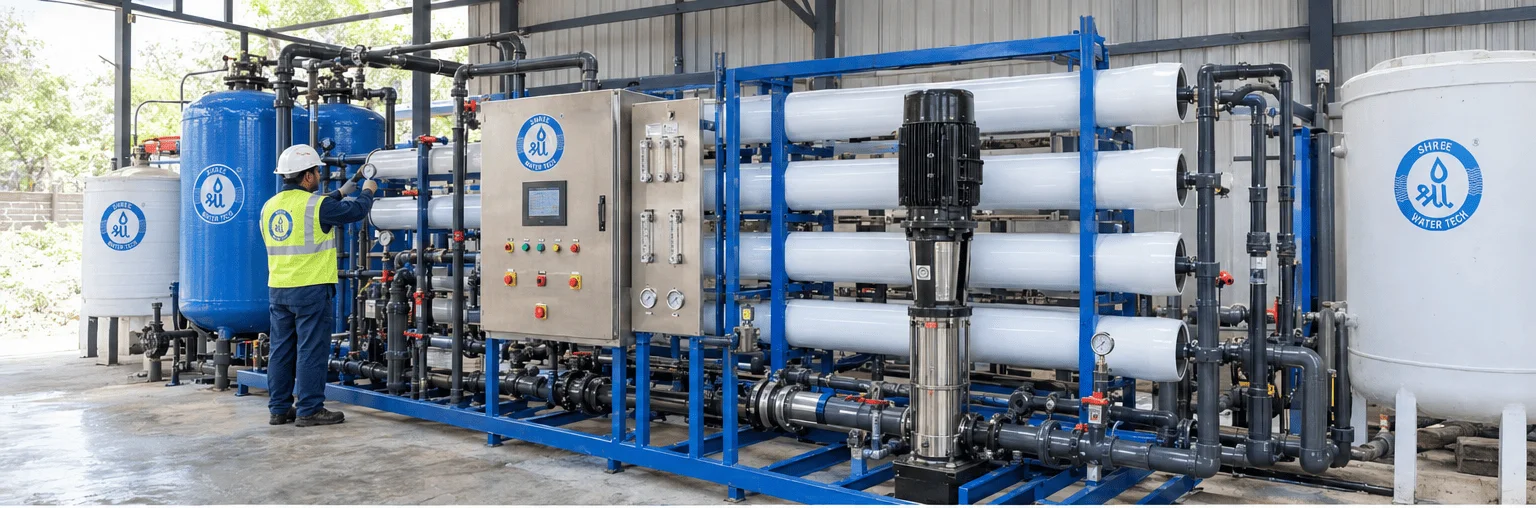
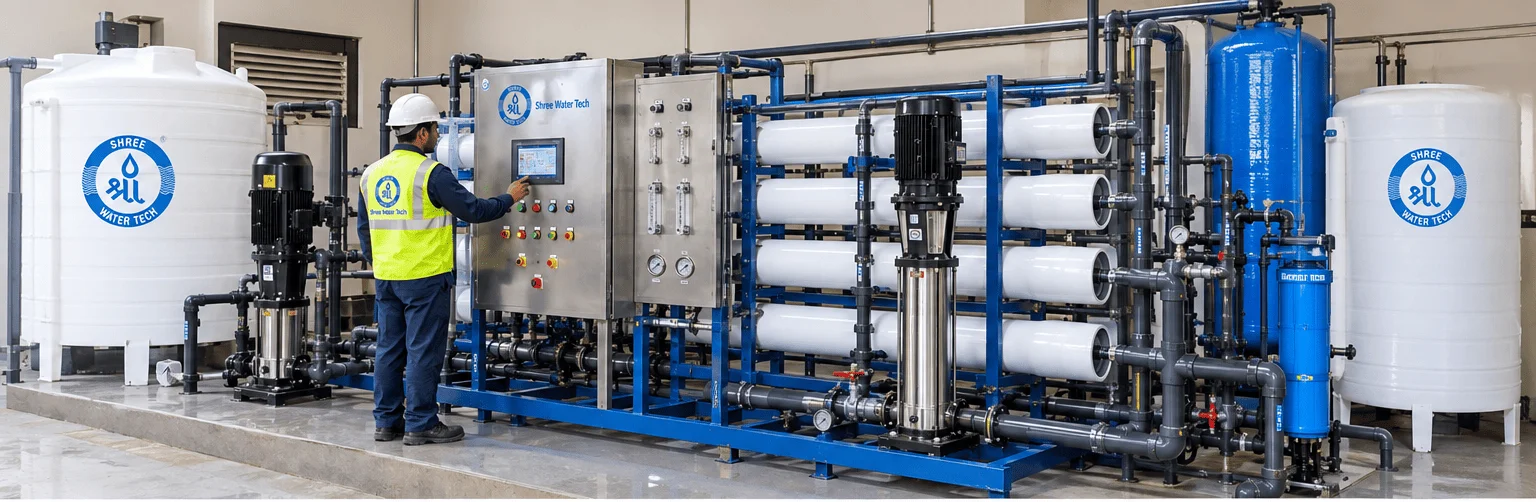
Shree Water Tech is a Pune-based Reverse Osmosis (RO) Plant manufacturers, suppliers, and Exporters, established in 2014. We design and integrate customized RO systems for domestic, commercial, institutional, and industrial applications, based on feed-water quality, required capacity, treatment objectives, operating conditions, and end-use requirements.
With 150+ water and wastewater treatment installations across India, our experience covers reverse osmosis, pretreatment, filtration, ultrafiltration, water softening, process-water treatment, wastewater treatment, water recycling, and product recovery systems.
Our technical team supports projects through the complete lifecycle, from water analysis and process selection to system design, manufacturing, installation, commissioning, automation, and after-sales technical support.
Whether the requirement is for borewell water, municipal water, brackish water, process water, or a specialized industrial application, we develop RO systems around the actual characteristics of the feed water and the required treated-water quality.
Top 10 Reverse Osmosis Plant Manufacturers in Pune
Pune has several companies offering Reverse Osmosis (RO) Plants and related
water-treatment solutions for industrial, commercial, institutional, municipal,
and specialized applications. The following companies are featured based on
their presence across search results for RO plants, industrial RO systems,
commercial RO plants, and related water-treatment solutions in Pune.
Sr. No.
Company Name
RO Plant & Water Treatment Solutions
1
Shree Water Tech
Reverse Osmosis Plants, Industrial RO Plants, Commercial RO
Plants, Brackish Water RO, High-Recovery RO, Automatic RO,
Compact Modular RO, Municipal RO and Turnkey RO solutions.
2
Envocare Projects & Services
RO plants and integrated water-treatment solutions including
RO, UF, water treatment, wastewater treatment and turnkey
treatment systems.
3
Envicare Technologies Pvt. Ltd.
Industrial and commercial water-treatment solutions including
RO systems, water purification, filtration and related
treatment technologies.
4
Ecomatrix Solutions
RO and water-treatment systems along with filtration,
wastewater treatment, packaged treatment systems and
customized water-treatment solutions.
5
Watervision Systems Pvt. Ltd.
RO plants, water-treatment systems, filtration and
wastewater-treatment solutions for industrial and commercial
applications.
6
Crystal Clear Water Technology
Reverse Osmosis Plants, water purification systems,
wastewater treatment systems, filtration and customized
water-treatment solutions.
Water and wastewater treatment systems including RO,
filtration, sewage treatment, effluent treatment and
customized treatment solutions.
9
Unitech Water Solution
RO and water-treatment solutions along with sewage treatment,
effluent treatment and customized turnkey water-treatment
systems.
10
Aquamarine Global Solutions
RO plants and water-treatment systems for industrial,
commercial and other application-specific water-treatment
requirements.
Why Shree Water Tech Stands Out for RO Plants in Pune
Shree Water Tech provides customized Reverse Osmosis Plant
solutions based on feed-water quality, required capacity, recovery,
pretreatment requirements, available installation space, operating conditions,
and the intended end use of the treated water.
The RO plant range includes Industrial RO Plants, Commercial RO Plants,
Brackish Water RO Plants, High-Recovery RO Systems, Automatic RO Plants,
Municipal RO Plants, Compact and Modular RO Plants, and Turnkey RO Plants.
Systems can be configured with appropriate pretreatment, filtration,
membrane treatment, post-treatment, instrumentation, and automation.
With experience across water and wastewater treatment applications,
Shree Water Tech supports projects from water analysis and process selection
through system design, manufacturing, installation, commissioning, and
technical support.
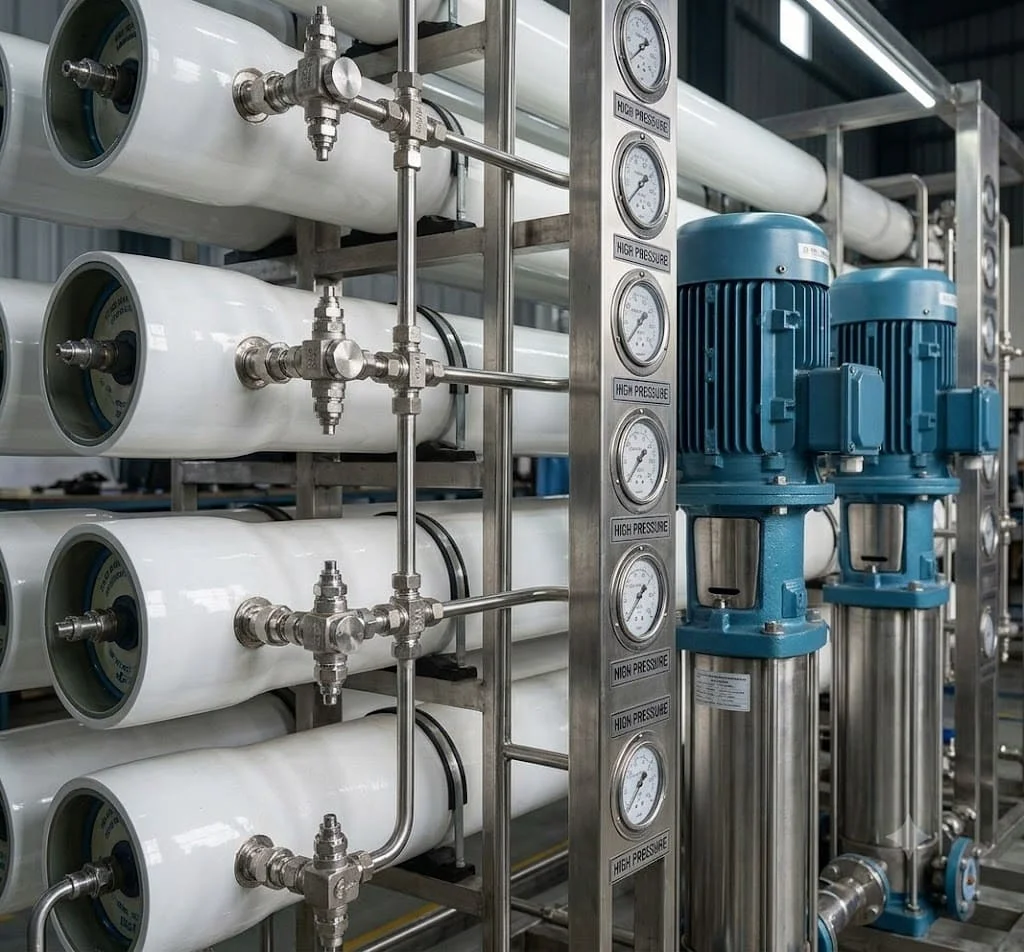
A Reverse Osmosis Plant is a water-treatment system that uses pressure-driven membrane separation to reduce dissolved salts, minerals, and other dissolved substances from water.
In an RO process, feed water is pressurized and supplied to a semi-permeable membrane. A portion of the water passes through the membrane as permeate, while the remaining stream becomes a more concentrated reject or concentrate stream.
The primary purpose of RO is to reduce dissolved substances and produce treated water suitable for the intended application.
RO performance depends on factors including:
Feed-water chemistry
TDS
Hardness
Temperature
Pressure
Membrane selection
Pretreatment
Recovery
Operating conditions
Membrane condition
RO should therefore be designed according to the actual feed-water characteristics rather than selected only by nominal plant capacity.
How Does a Reverse Osmosis Plant Work?
A typical RO system operates through several treatment stages.
1. Feed-Water Supply
Raw water is collected from the selected source and transferred to the pretreatment section using an appropriate feed pump.
2. Pretreatment
Pretreatment helps reduce substances that may affect RO membrane performance.
Depending on water quality, this may include:
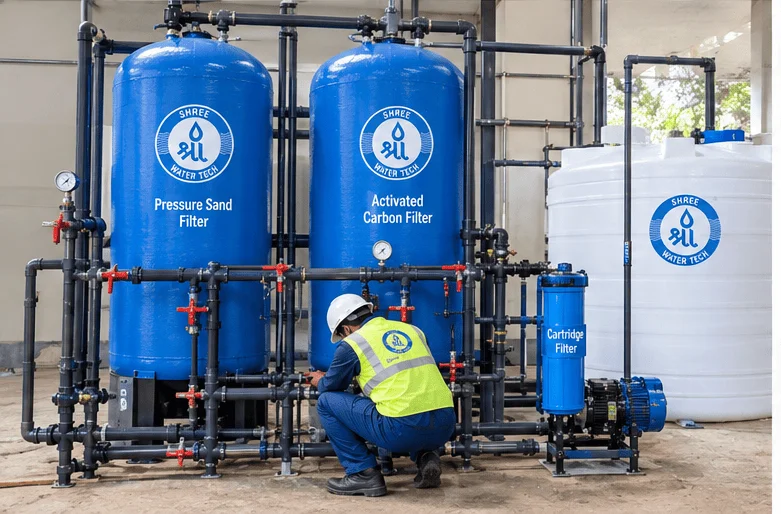
Pressure Sand Filter
Activated Carbon Filter
Water softener
UF
Chemical dosing
Other specialized pretreatment
3. Cartridge Filtration
A cartridge filter provides fine particulate filtration before the high-pressure pump and membrane section.
4. High-Pressure Pumping
The feed water is pressurized to the level required by the selected membrane and water chemistry.
5. Membrane Separation
Pressurized water enters the RO membrane assembly. Water passes through the membrane as permeate while the concentrated stream leaves as reject or concentrate.
6. Permeate Collection
The treated permeate is collected and transferred to a storage tank or subsequent treatment stage.
7. Post-Treatment
Depending on the application, post-treatment may include:
UV disinfection
Ozone
Mineralization
pH correction
Additional polishing
Demineralization
Other application-specific treatment
Types of RO Plants We Manufacture for Industrial & Commercial Applications
Shree Water Tech designs and integrates RO plants for different capacities, water sources, operating conditions, and applications.
The final configuration is determined after considering feed-water quality, required permeate quality, daily water demand, recovery, available space, operating requirements, and end-use application.
1 / 3
Industrial RO Plant
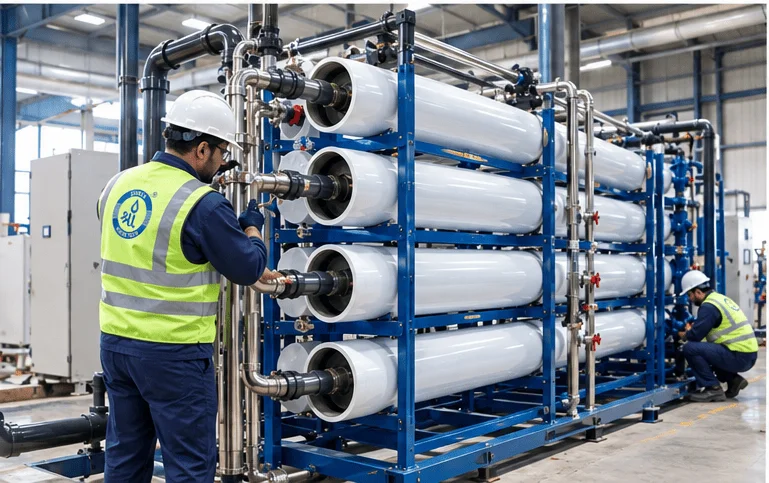
An Industrial RO Plant is a membrane-based water-treatment system designed to produce treated water for manufacturing, process, utility, and other industrial applications.
Typical Applications
Manufacturing industries
Pharmaceutical facilities
Food-processing plants
Textile industries
Chemical industries
Engineering facilities
Boiler-feed-water pretreatment
Process-water applications
Typical Capacity
10–1000+ KLD, depending on project requirements.
Technology
Industrial spiral-wound RO membranes with customized pretreatment, high-pressure pumping, instrumentation, and automation where required.
Industrial RO systems can be integrated with Pressure Sand Filters, Activated Carbon Filters, softeners, cartridge filters, chemical dosing, UF, UV, EDI, demineralization, and other downstream treatment systems depending on the required water quality.
A Commercial RO Plant is designed for establishments requiring a reliable supply of treated water for multiple users, outlets, or commercial operations.
Applications
Hotels
Restaurants
Offices
Schools
Hospitals
Commercial buildings
Institutions
Residential complexes
Typical Capacity
250–10,000+ LPD, depending on water demand and application.
Commercial RO systems can be configured with suitable pretreatment, membrane systems, storage, instrumentation, and post-treatment.
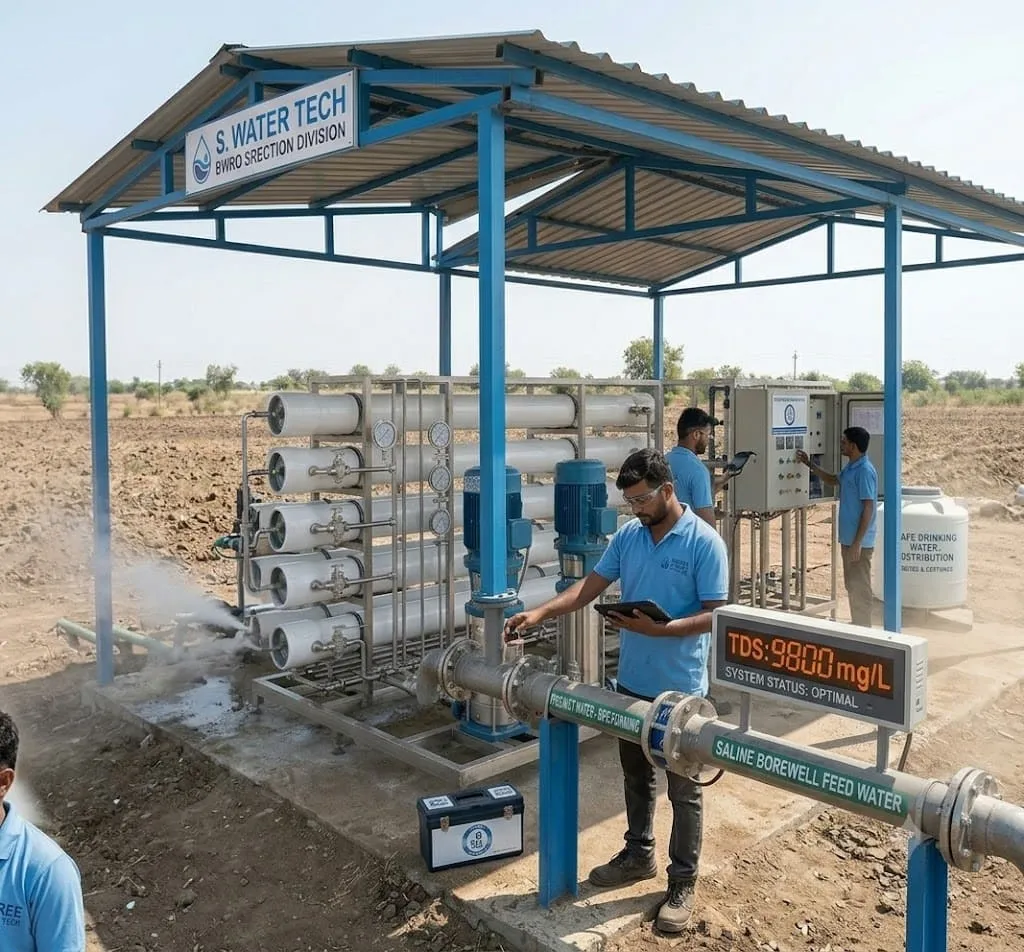
A Brackish Water RO (BWRO) Plant is designed to treat water with elevated dissolved salts and TDS, including saline borewell and groundwater sources.
Typical Applications
Borewell water
Saline groundwater
Industrial water
High-TDS process water
Typical Feed TDS
Approximately 500–10,000 mg/L, subject to feed-water analysis and membrane selection.
BWRO systems may incorporate suitable pretreatment, antiscalant dosing, high-pressure pumping, membrane arrays, and concentrate-management arrangements.
A High-Recovery RO System is designed to increase the proportion of usable permeate obtained from feed water while reducing the volume of concentrate requiring discharge or further treatment.
Applications
Water-scarce sites
Water recycling
Industrial water reuse
Recovery applications
Concentrate-management systems
ZLD-oriented treatment systems
The achievable recovery depends on feed-water chemistry, scaling and fouling potential, membrane configuration, pretreatment, operating conditions, and concentrate-management requirements.
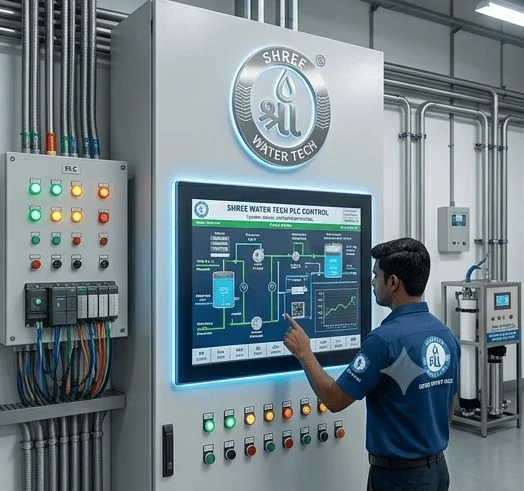
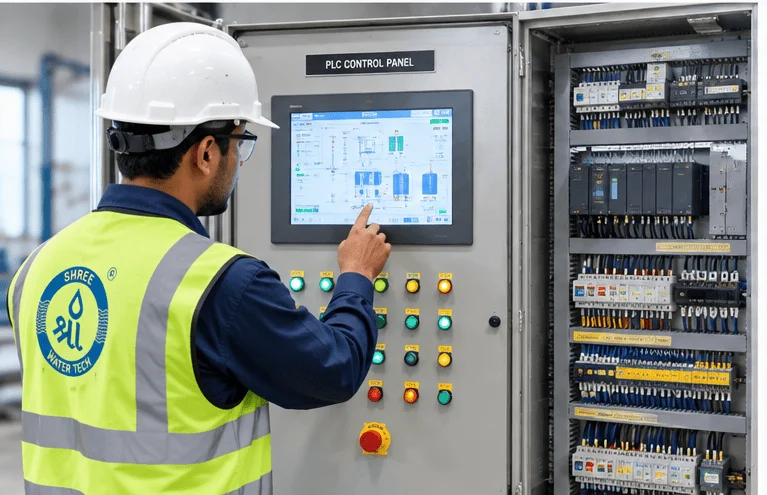
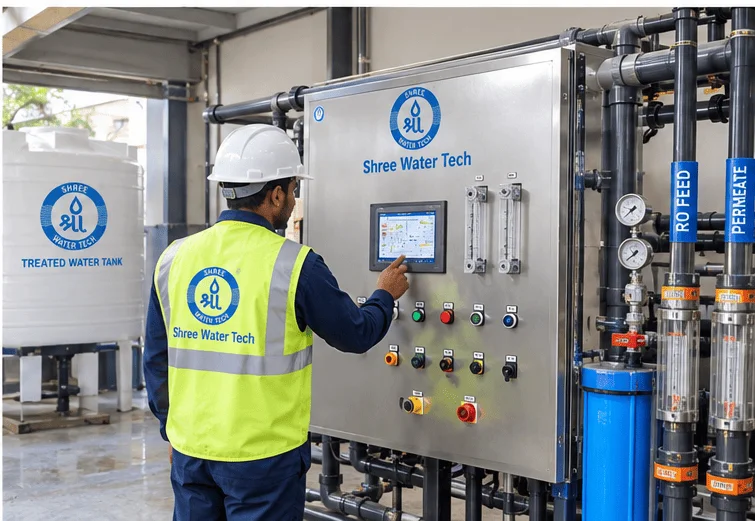
An Automatic RO Plant uses instrumentation, control systems, automated valves, and programmable controls to monitor and regulate plant operation with reduced manual intervention.
Typical Controls
PLC/control panel
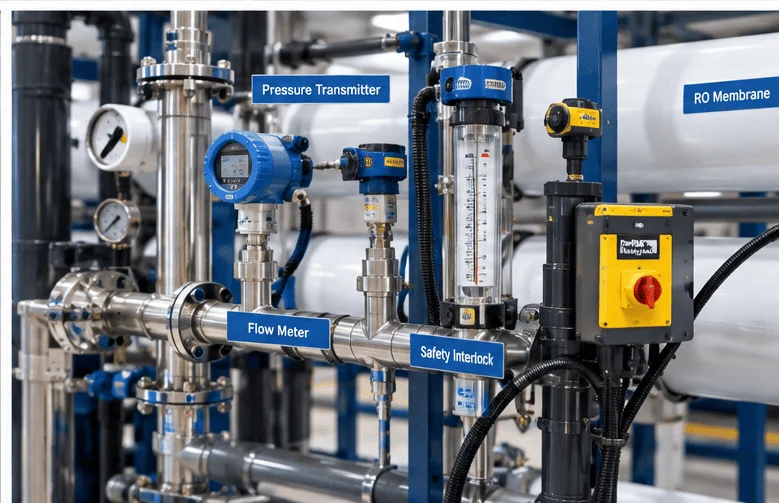
Pressure monitoring
Flow monitoring
Conductivity/TDS monitoring
Automatic shut-off
Safety interlocks
Automated valves
Automatic RO systems are suitable for industrial, commercial, multi-shift, and low-supervision applications where consistent operation and monitoring are required.
Turnkey solutions can be developed for industrial, commercial, institutional, and larger water-treatment projects where customers prefer coordinated project responsibility.
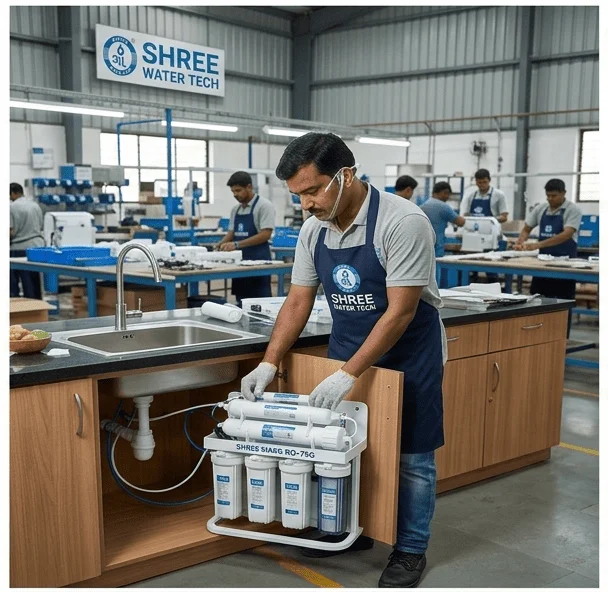
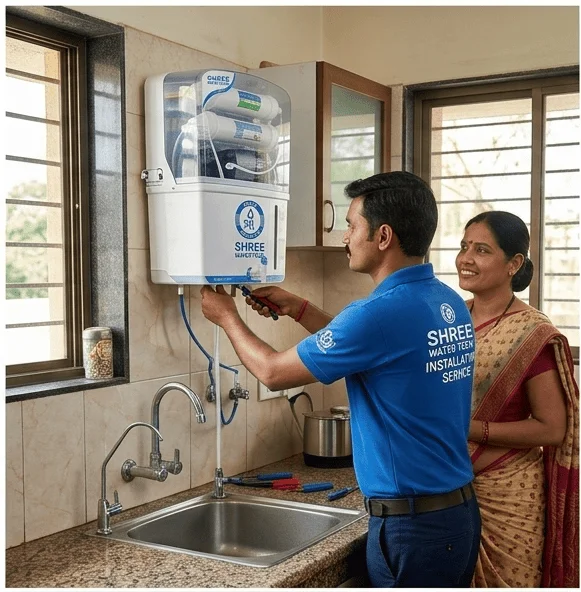
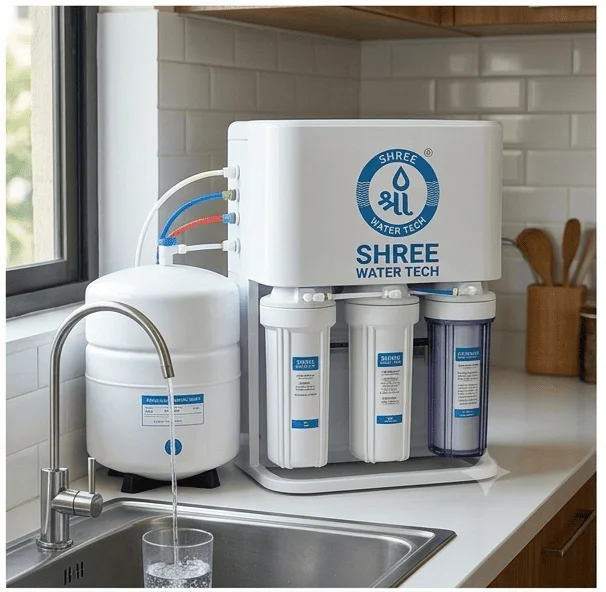
A Domestic RO Plant is a compact reverse osmosis system designed for household drinking-water purification.
The appropriate system depends on the incoming water's TDS, hardness, turbidity, source, daily consumption, and required treatment quality.
Typical Capacity
50–1000 LPD
Domestic RO systems may incorporate multiple filtration stages and TFC RO membranes according to water quality and application.
Municipal RO Plant
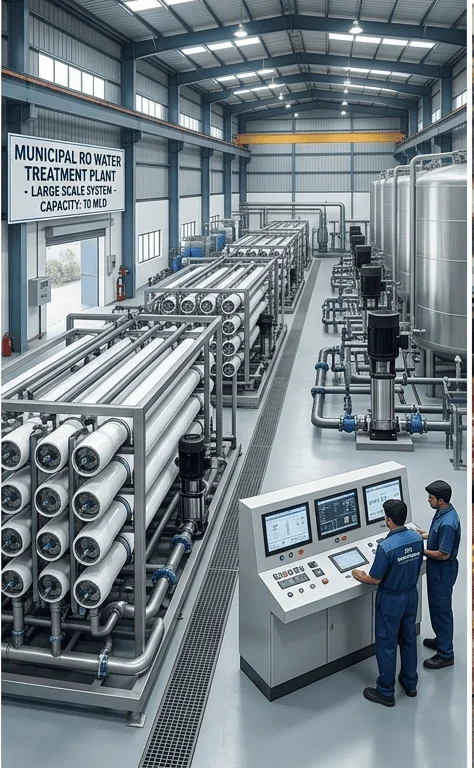
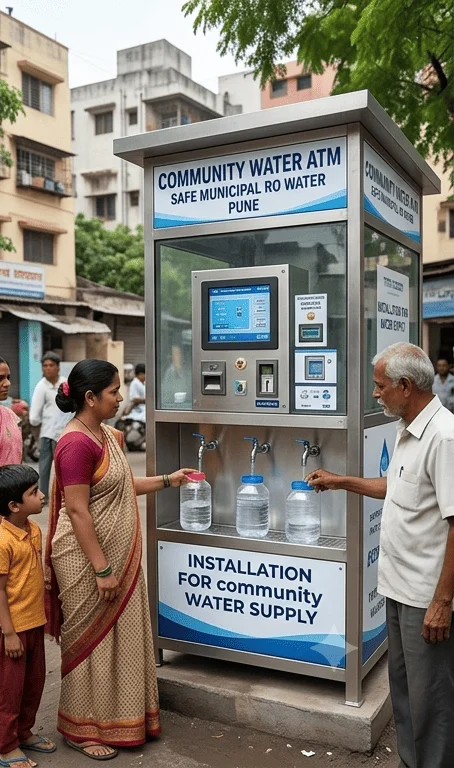
A Municipal RO Plant is a larger-scale system designed for centralized or community-level water treatment.
Applications
Community water supply
Housing societies
Public drinking-water projects
Water dispensing systems
Large institutional applications
Municipal systems may use multiple RO trains with automated pretreatment, monitoring, pumping, and distribution systems.
1 / 3
1 / 3
Compact & Modular RO Plant
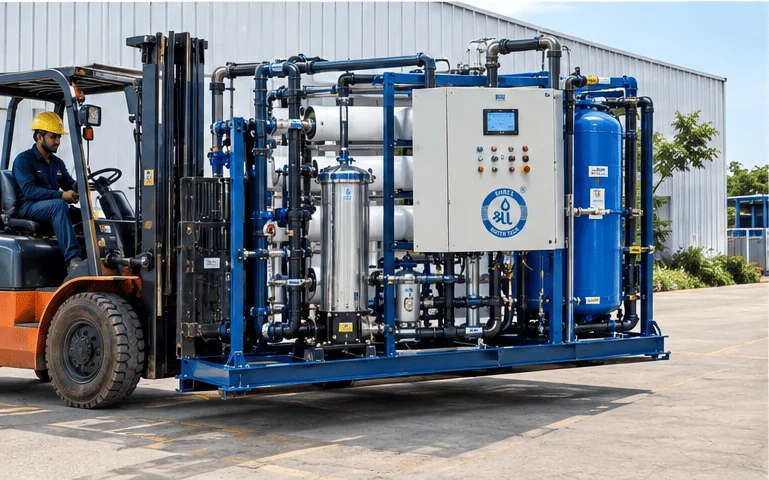
A Compact and Modular RO Plant combines RO treatment equipment into a space-efficient configuration.
Features
Skid-mounted construction
Pre-piped and pre-wired components
Compact equipment arrangement
Integrated controls
Modular expansion
Simplified installation
These systems can be useful where floor space is limited or where future capacity expansion is expected.
Technical Specifications of RO Plants Manufactured by Shree Water Tech
Shree Water Tech designs and manufactures different types of RO plants for industrial, commercial, domestic, municipal, and water-reuse applications. The following table provides typical technical specifications, including plant capacity, operating pressure, water recovery, membrane configuration, filtration, pumping systems, controls, and applications. Actual specifications depend on feed-water analysis, required permeate quality, membrane selection, and project requirements.
RO Plant Type
Capacity
Typical Operating Pressure
Indicative Recovery
Membrane & Filtration
Pump, Controls & Construction
Applications
1. Industrial RO Plant
10–1,000+ KLD (10,000–1,000,000+ LPD)
Approximately 8–16 bar for many brackish-water designs; higher pressures may be required for difficult feeds.
Approximately 50–75%, depending on feed chemistry and design.
Common membrane sizes: 4-inch or 8-inch diameter.
Cartridge filtration commonly 5 µm nominal or finer, as specified.
Industrial-duty feed and high-pressure pumps.
Pressure gauges, flow meters and conductivity monitoring.
SS, coated steel or other compatible skid materials.
Factories, pharmaceuticals, textiles, food processing and industrial process water.
2. Commercial RO Plant
250–10,000+ LPD
Approximately 6–12 bar for many low-to-moderate salinity feeds.
Approximately 40–70%.
Commonly 2.5-inch or 4-inch membrane elements, depending on capacity.
Sediment and carbon filtration as required.
Compact pumps and frame.
Automatic tank-level controls and low-pressure protection options.
Hotels, restaurants, offices, schools and commercial buildings.
3. Brackish Water RO Plant
Project-specific; can be designed for industrial-scale output.
Approximately 10–25 bar for many brackish-water applications, subject to TDS and membrane selection.
Approximately 35–70%, depending on feed-water chemistry.
Commonly 4-inch or 8-inch brackish-water membranes.
Feed TDS: approximately 500–10,000 mg/L as an initial design range.
High-pressure pump, antiscalant dosing and pressure-rated components.
Corrosion resistance selected for feed-water chemistry.
Saline borewell water, groundwater and high-TDS industrial water.
4. High-Recovery RO System
Customized to reuse demand and feed flow.
Typically determined by feed salinity, membrane configuration and concentration effects.
Approximately 70–85% may be achievable in suitable applications; higher targets require specific validation.
Staged membranes, concentrate recirculation or additional recovery stages where appropriate.
Pretreatment tailored to scaling risk.
Flow balancing, pressure monitoring and PLC control options.
Concentrate handling included in the design assessment.
Water reuse, industrial recycling and ZLD-oriented treatment projects.
5. Automatic RO Plant
Selected according to industrial or commercial demand.
Depends on membrane type and feed-water salinity.
Typically follows the underlying RO process design.
Membrane elements selected for required output.
Automatic flushing and pretreatment sequencing options.
Multi-shift factories, institutions and low-supervision operations.
6. Turnkey RO Plant
Customized to project scope and water demand.
Established through process calculations and selected equipment.
Based on the selected treatment process and feed quality.
Membrane arrays, pretreatment, post-treatment and polishing equipment as specified.
Integrated design, manufacturing, piping, electricals, automation, testing and commissioning as contracted.
Complete water-treatment projects for industries, institutions and commercial facilities.
7. Domestic RO Plant
50–1,000 LPD product range.
Often approximately 3–8 bar inlet pressure, depending on the model and booster pump.
Varies substantially with feed TDS, inlet pressure and product design; check the rated recovery.
Commonly 1812 or 2012-format membrane elements in household systems.
Sediment and carbon cartridges.
Compact housing, booster pump where needed, storage tank and automatic shut-off.
Typical household tank options: 8–12 litres.
Household drinking-water purification.
8. Municipal RO Plant
Designed for community demand; multiple parallel trains can be used.
Determined by source-water quality and membrane arrangement.
Project-specific; constrained by pretreatment, source quality and concentrate disposal.
Multiple 8-inch membrane elements or trains for larger systems.
Multimedia filtration and other pretreatment as needed.
Duty/standby pump arrangements, PLC/SCADA options, storage-level monitoring and distribution integration.
Community supply, housing societies and institutional water projects.
9. Compact & Modular RO Plant
Customized to the required output and available space.
Depends on membrane selection and feed-water characteristics.
Based on the selected RO process and feed chemistry.
Common 2.5-inch, 4-inch or 8-inch membranes depending on scale.
Skid-mounted filtration and RO modules.
Pre-piped components, optional pre-wiring and integrated control panel.
Layout planned for access and maintenance.
Space-constrained factories, remote facilities and phased capacity expansion.
Technical Note: The pressure and recovery figures are indicative engineering ranges, not guaranteed ratings for every plant. Actual performance depends on feed-water chemistry, temperature, membrane selection, pretreatment and operating conditions. High-recovery systems require particular attention to scaling, concentrate management and disposal requirements.
Additional Numeric Specifications Customers Can Understand
The following reference values help customers understand RO plant capacity, filtration, membrane dimensions, monitoring and automation before selecting a suitable water-treatment system.
Technical Parameter
Typical Numeric Reference
What It Means to the Customer
10 KLD Capacity
10,000 litres/day
Useful for estimating daily water production.
50 KLD Capacity
50,000 litres/day
Suitable as a preliminary reference for medium-sized water demand.
100 KLD Capacity
100,000 litres/day (100 m³/day)
Equivalent to 100 cubic metres of treated water per day.
Helps remove fine suspended particles before the RO membranes; the actual rating depends on the design.
Membrane Diameter
2.5, 4 or 8 inches
Indicates the membrane element format, not the permeate output by itself.
Pressure Monitoring
Feed, pump discharge and concentrate pressure
Helps operators monitor operating conditions and identify abnormal pressure drops.
Water-Quality Monitoring
Conductivity in µS/cm or TDS in mg/L
Indicates dissolved ionic content; conductivity-to-TDS conversion is approximate.
Automatic Operation
PLC with configured alarms and interlocks
Reduces routine manual intervention and supports consistent operation.
Storage Capacity
Sized to demand and production schedule
Helps accommodate peak usage and maintain a reliable water supply.
Why Choose Shree Water Tech for Reverse Osmosis Plants in Pune?
Established in 2014, Shree Water Tech provides customized Reverse Osmosis (RO) Plant solutions in Pune for domestic, commercial, institutional, and industrial applications. With 150+ water and wastewater treatment installations across India, we focus on application-based system design, appropriate membrane selection, effective pretreatment, and reliable plant integration. Our team supports customers from initial water analysis and engineering to manufacturing, installation, commissioning, and technical assistance.
Established Industry Experience: Since 2014, we have been providing water-treatment solutions designed around different water sources, treatment capacities, and application requirements.
150+ Installations Across India: Our experience across water and wastewater treatment projects helps us understand the practical requirements of industrial, commercial, and institutional customers.
Customized RO Plant Design: We configure RO systems according to feed-water TDS, hardness, water analysis, required permeate quality, daily consumption, and operating conditions.
Comprehensive Water-Treatment Solutions: Our capabilities include RO, ultrafiltration (UF), filtration, water softening, sewage treatment (STP), and effluent treatment (ETP) systems.
Appropriate Pretreatment and Membrane Selection: We assess pretreatment requirements and membrane configurations to support effective dissolved-solids reduction and protect RO system performance.
Industrial and Commercial Applications: We design solutions for manufacturing facilities, hotels, hospitals, institutions, food-processing units, and other applications requiring treated water.
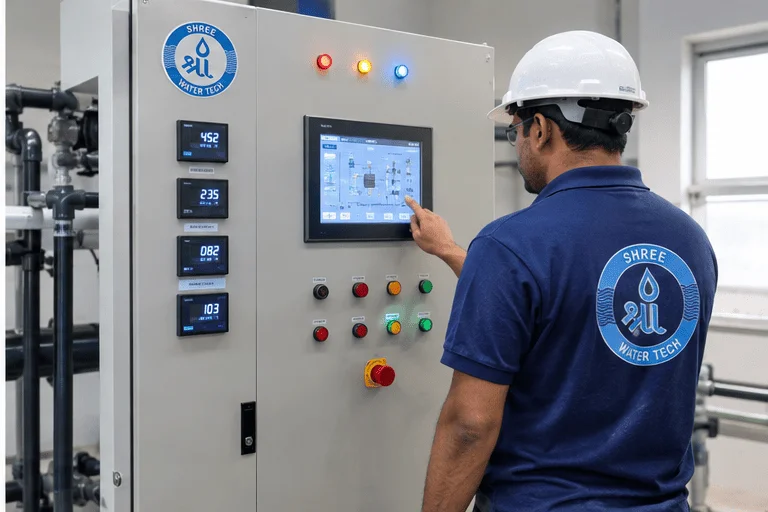
Automation and Process Monitoring: Depending on project requirements, RO plants can include PLC controls, pressure and flow monitoring, conductivity/TDS measurement, and safety interlocks.
Design to Commissioning Support: Our project services can cover system design, equipment selection, manufacturing, installation, piping and electrical integration, testing, and commissioning.
Recovery-Focused Engineering: We evaluate suitable water-recovery targets according to feed-water chemistry, scaling potential, membrane limitations, and concentrate-management requirements.
Technical and Maintenance Assistance: We support customers with operational guidance, troubleshooting, membrane-maintenance requirements, and other service needs according to the project scope.
Our RO Plant Capabilities
We provide feed-water assessment, capacity calculation, pretreatment design, RO membrane selection, recovery evaluation, pump and equipment selection, automation, system integration, installation and commissioning.
Each RO plant is configured according to the water source, water quality, capacity, site conditions and end-use requirements, providing coordinated support from initial design through plant operation.
How We Design an RO Plant
An RO plant should be designed around the water source and required end-use rather than selected only by capacity.
Our typical engineering process includes:
1. Feed-Water Analysis
We evaluate available water-quality information including TDS, hardness, turbidity, pH, temperature, silica, iron, manganese, alkalinity, chlorine, and other relevant parameters.
2. Capacity Selection
Required capacity is determined from:
Daily water demand
Peak consumption
Operating hours
Storage capacity
Required production rate
Future expansion requirements
3. Required Permeate Quality
The required treated-water quality is established according to the intended application.
4. Pretreatment Selection
Pretreatment is selected according to the contaminants and membrane-protection requirements.
5. Membrane Selection
Membrane type and configuration are selected according to feed-water chemistry, capacity, pressure requirements, recovery, and required permeate quality.
6. Recovery Design
The recovery target is evaluated based on feed-water chemistry, scaling potential, membrane limitations, and concentrate-management requirements.
7. Pump & Equipment Selection
Suitable pumps, membrane housings, flow meters, pressure instruments, valves, dosing systems, and other equipment are selected according to the design.
8. Automation
Where required, the system can incorporate PLC/control-panel automation, sensors, conductivity monitoring, automated valves, and safety interlocks.
9. Installation & Commissioning
The completed system is installed, tested, commissioned, and evaluated against the applicable project requirements.
Our RO Plant Project Experience
Shree Water Tech has completed 150+ water and wastewater treatment installations across India covering different treatment technologies and applications.
For confidentiality and accuracy, project information should be published using verified customer, site, capacity, water-quality, and performance data.
Where detailed project information can be disclosed, representative installations can be documented through project case studies.
Representative Project Profile 1 – Industrial Borewell Water RO System
The representative requirement was to provide a reliable source of treated water for an industrial process where the available borewell water contained elevated dissolved solids and required additional treatment before use.
The system needed to provide a consistent treated-water supply while incorporating appropriate pretreatment and membrane protection.
Solution Provided
The representative system configuration included:
Raw-water feed system
Pressure Sand Filter
Activated Carbon Filter
Chemical dosing
Cartridge filtration
High-pressure pump
RO membrane assembly
Flow and pressure instrumentation
Conductivity/TDS monitoring
Automatic control system
Permeate collection
Reject-management arrangement
The pretreatment stage was designed to reduce suspended matter and other substances that could affect downstream RO membrane performance.
Result
For an actual project, this section should report verified operating results such as:
Actual permeate production
Achieved recovery
Feed and permeate TDS
Required water-quality target
Operating stability
Documented reduction in dissolved solids
Customer-specific operational improvement
Project Photographs
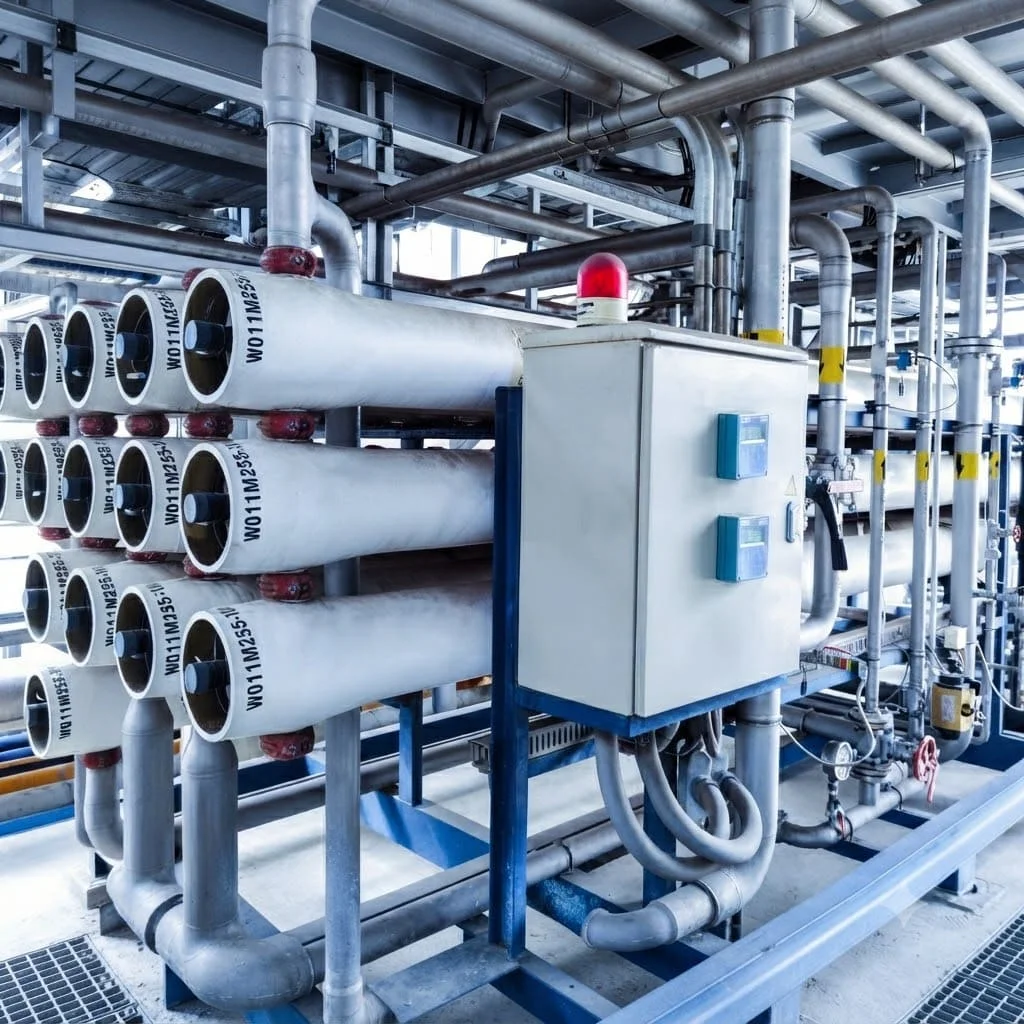
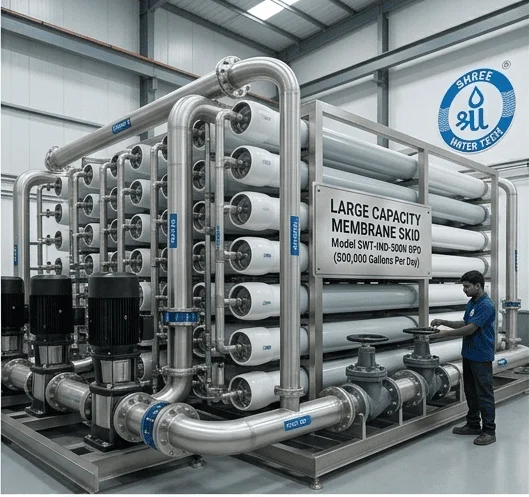
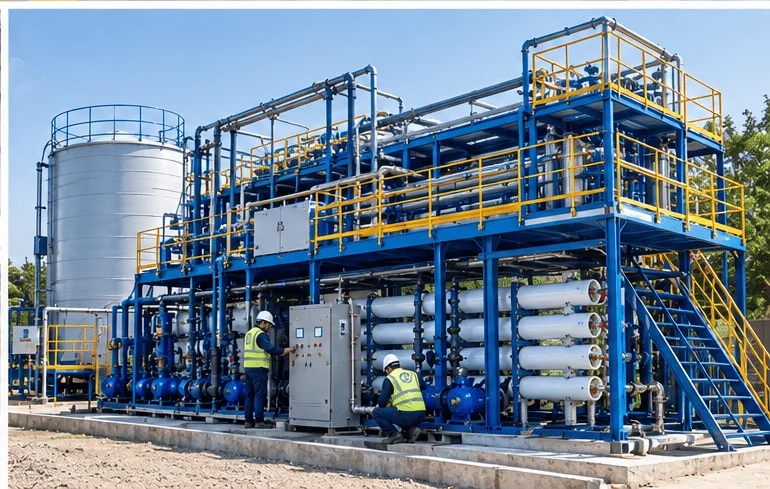
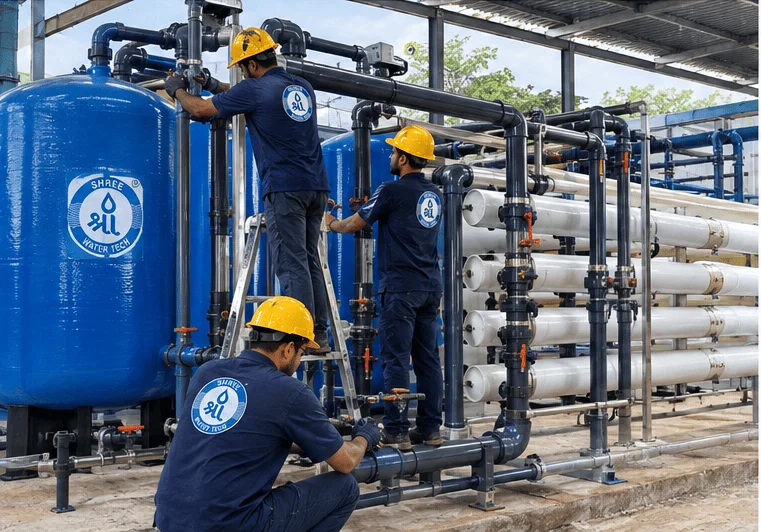
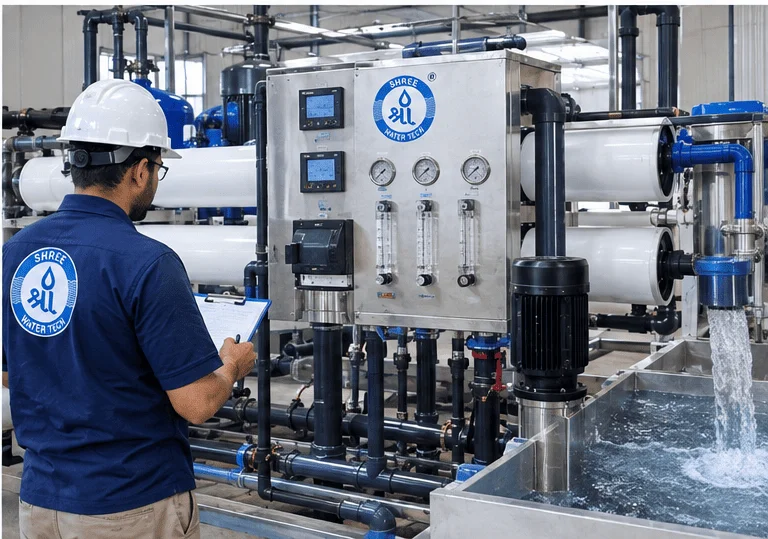
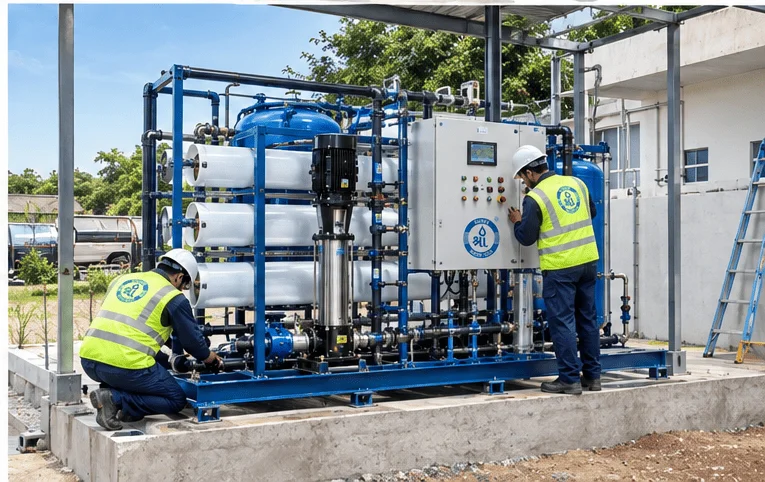
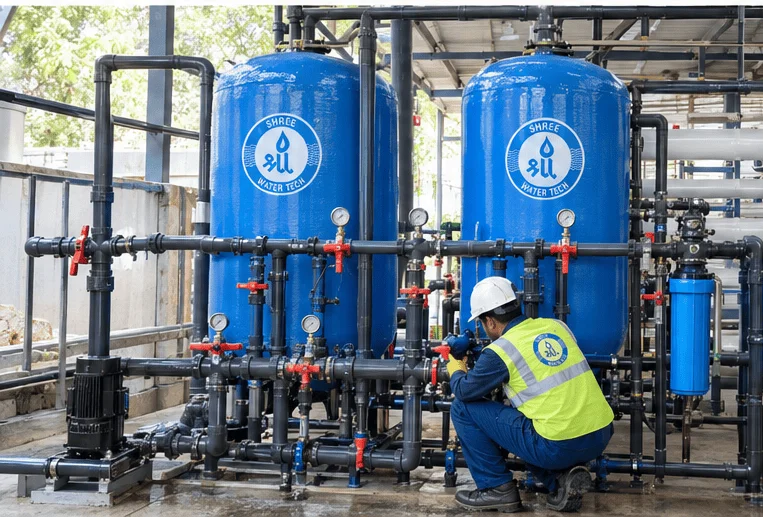
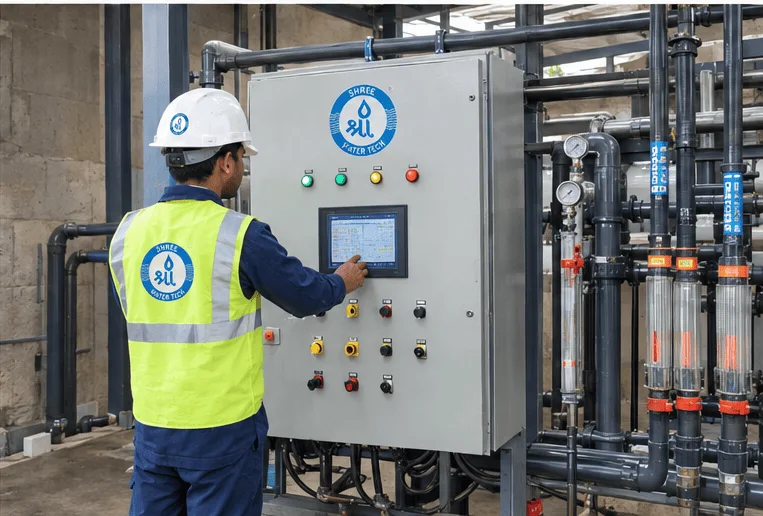
RO skid and membrane housingsPretreatment filtersControl panel and piping
Representative Project Profile 2 – Commercial RO Water Treatment System
The representative commercial facility required a dependable treated-water supply for multiple users and daily operations.
The treatment system needed to accommodate regular water demand while maintaining suitable treated-water quality and providing straightforward operation and maintenance.
Solution Provided
A representative system could include:
Feed-water storage
Feed pump
Pressure Sand Filter
Activated Carbon Filter
Cartridge filtration
High-pressure pump
RO membrane system
Flow and pressure monitoring
Conductivity/TDS monitoring
Treated-water storage
Optional UV or other post-treatment
The system configuration would be finalized after reviewing the actual water analysis and daily consumption requirements.
Result
The actual case study should report verified values such as:
Installed RO capacity
Permeate production
Feed-water TDS
Permeate TDS/conductivity
Recovery
Operating hours
Customer application
Documented operational results
Project Photographs
Completed RO systemPretreatment and storageInstallation and instrumentation
Representative Project Profile 3 – High-TDS Borewell Water RO System
The representative industrial application required treatment of high-TDS borewell water for use as process water.
The primary requirement was to reduce dissolved solids and provide a consistent supply of treated water suitable for the downstream process.
Solution Provided
The representative treatment configuration included:
Raw-water storage
Feed pump
Multimedia/Pressure Sand Filtration
Activated Carbon Filtration where required
Chemical dosing
Cartridge filtration
High-pressure pumping
Industrial RO membrane system
Pressure and flow monitoring
Conductivity/TDS monitoring
PLC-based control
Permeate storage
Reject/concentrate management
Result
Actual project results should be documented from commissioning records and operating data, including:
Feed-water TDS
Permeate TDS
Permeate flow
Recovery
Operating pressure
Required process-water quality
System operating hours
Any documented water-saving or process improvement
Project Photographs
Industrial RO plantCommissioningPLC control system
Factors to Consider When Selecting an RO Plant
The first step in selecting an RO plant should be an appropriate feed-water analysis.
Important parameters can include:
TDS
Hardness
Turbidity
pH
Temperature
Silica
Iron
Manganese
Alkalinity
Chlorine
Microbiological characteristics where applicable
Other factors include:
Required permeate quality
Daily water demand
Peak consumption
Required recovery
Available space
Power supply
Pretreatment requirements
Membrane selection
Concentrate management
Automation requirements
Future expansion
Selecting an RO plant solely by nominal capacity can result in an unsuitable design if feed-water chemistry and actual operating conditions are not considered.
RO Plant Capacity
RO plant capacity may be expressed in LPH (Litres Per Hour), LPD (Litres Per Day), KLD (Kilolitres Per Day), or MLD (Million Litres Per Day) depending on the application and plant size.
Common Small and Commercial Capacities
Capacity
Nominal Production
50 LPH
50 litres/hour
100 LPH
100 litres/hour
250 LPH
250 litres/hour
500 LPH
500 litres/hour
1,000 LPH
1,000 litres/hour
2,000 LPH
2,000 litres/hour
3,000 LPH
3,000 litres/hour
5,000 LPH
5,000 litres/hour
10,000 LPH
10,000 litres/hour
Larger industrial and municipal RO plants can be engineered according to project requirements.
Actual permeate production depends on feed-water temperature, pressure, salinity, membrane condition, recovery, pretreatment, and operating conditions.
Major Components of an RO Plant
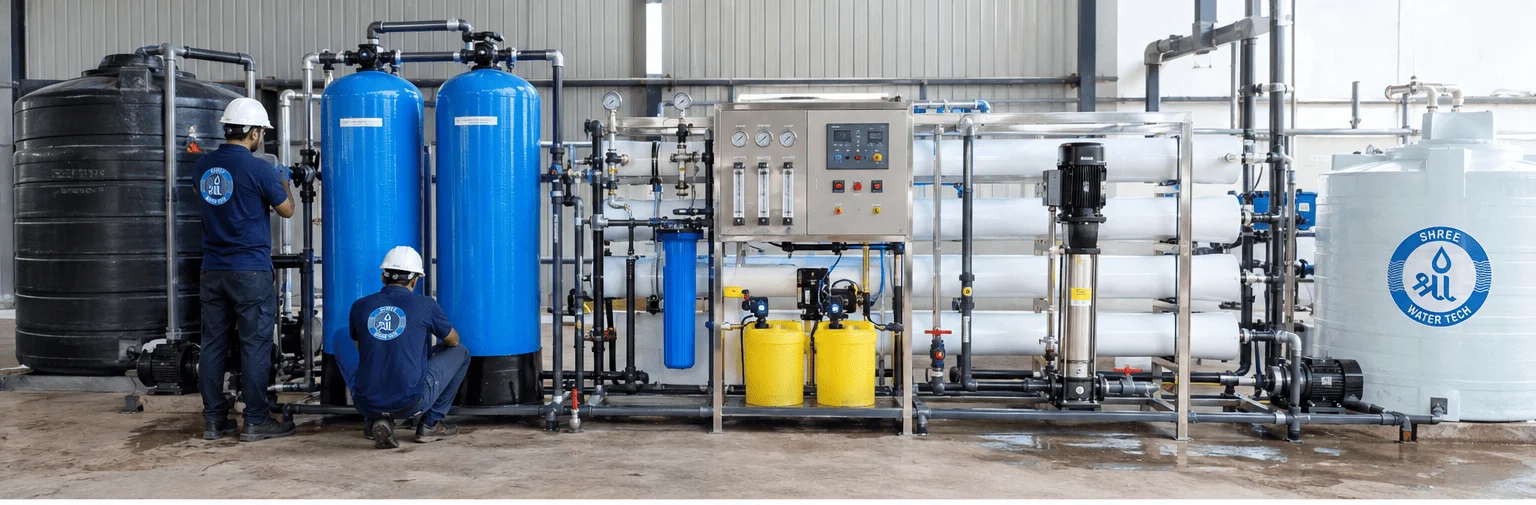
A typical RO system may include:
Raw-water tank
Feed-water pump
Pressure Sand Filter
Activated Carbon Filter
Water softener, where required
Micron/cartridge filter
Chemical dosing system
High-pressure pump
RO membrane housings
RO membranes
Flow meters
Pressure gauges
Conductivity/TDS monitoring
Control panel
PLC automation, where required
Permeate storage tank
Post-treatment system
Concentrate outlet and management system
The final configuration depends on the water source, water analysis, required capacity, treatment objectives, and intended application.
RO Plant Features & Engineering Benefits
Category
Feature
Purpose
Membrane Technology
Semi-permeable RO membranes
Reduction of dissolved substances
Pretreatment
Multi-stage filtration
Helps protect RO membranes
Purification
Pressure-driven separation
Produces treated permeate
Monitoring
Pressure and flow instruments
Supports process monitoring
Automation
PLC/control systems
Reduces routine manual intervention
Configuration
Compact/modular options
Supports installation flexibility
Recovery
Recovery-focused design
Helps optimize water utilization
Application
Customized configuration
Supports different water sources
Maintenance
Replaceable filtration components
Facilitates routine servicing
Post-Treatment
UV/ozone/mineralization options
Provides additional water conditioning
Applications of Reverse Osmosis Plants
RO systems can be designed for a wide range of water-treatment applications.
Drinking Water Treatment: RO plants can be used to produce treated drinking water from suitable municipal, groundwater, borewell, or brackish-water sources where dissolved solids and other contaminants require reduction.
Commercial Water Treatment: Hotels, restaurants, offices, schools, hospitals, and other commercial facilities can use RO systems according to their daily water demand and required water quality.
Industrial Process Water: Industrial RO systems can provide treated water for manufacturing and process applications where controlled dissolved-solids levels are required.
Boiler Feed-Water Pretreatment: RO can be used as a pretreatment stage before downstream demineralization or polishing systems to reduce the dissolved ionic load entering boiler-feed-water treatment systems.
Pharmaceutical Applications: RO can form part of a broader pharmaceutical water-treatment system together with technologies such as UF, EDI, UV, and other polishing processes, depending on the required water specification.
Food & Beverage Industry: RO systems can be used for ingredient water, process water, and utility applications where controlled water quality is required.
Dairy Industry: RO can be used for process-water treatment and selected water-recovery applications in dairy facilities.
Textile Industry: Treated low-TDS water can be used for selected textile processing, dyeing, washing, and finishing applications.
Chemical Industry: RO can be incorporated into chemical-industry water-treatment systems where reduced dissolved solids are required for process or utility water.
Power & Utility Applications: RO can be used as part of water-treatment systems for utility and boiler-feed-water applications, typically followed by additional polishing where required.
RO Plant Installation & Commissioning
RO plant installation typically involves:
Site assessment
Equipment positioning
Feed-water connections
Product-water connections
Concentrate/reject arrangements
Piping
Electrical connections
Control-panel integration
Instrumentation
Pump and valve testing
System commissioning
Performance verification
The installation requirements vary according to plant capacity, configuration, site conditions, and project scope.
RO Plant Maintenance & Technical Support
Regular maintenance helps maintain stable RO performance and can help extend the service life of treatment equipment.
Routine maintenance may include:
Cartridge-filter replacement
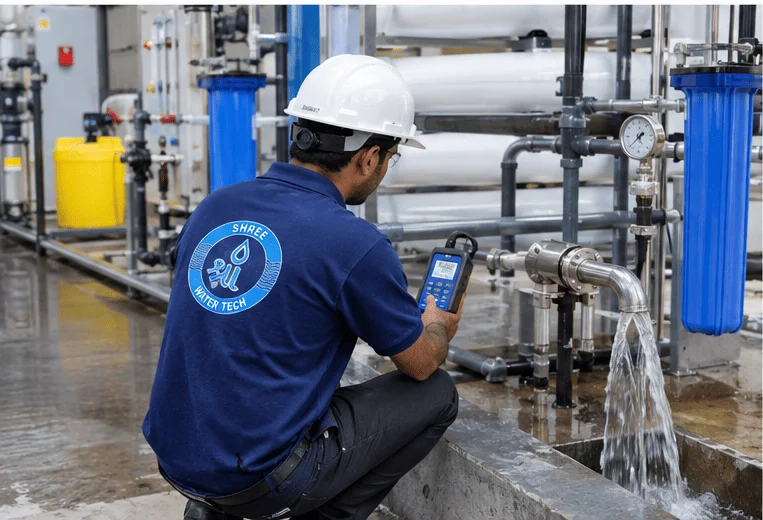
Pressure monitoring
Permeate-flow monitoring
Product-water TDS/conductivity monitoring
Pump inspection
Membrane cleaning when required
Pretreatment inspection
Valve and piping inspection
Instrument calibration
Recovery monitoring
Control-panel inspection
Shree Water Tech also provides technical assistance for installation, commissioning, troubleshooting, and maintenance according to project requirements.
Planning a new RO plant, upgrading an existing system, or looking for a customized water-treatment solution?
Share the following information with our team:
Water source
Water-analysis report
Feed-water TDS
Required RO capacity
Intended application
Required operating hours
Installation location
Required automation level
Our technical team can review the requirements and help determine an appropriate RO plant configuration, pretreatment system, capacity, recovery arrangement, and project scope.
Shree Water Tech is a leading Reverse Osmosis (RO) Plant manufacturers, suppliers, and exporters in Pune. We provide reliable and application-specific RO plant solutions for businesses across different industries, with a focus on water quality, efficient treatment, dependable equipment and long-term plant performance. From feed-water assessment and system design to manufacturing, installation, commissioning and technical support, we provide complete water-treatment solutions tailored to each project’s capacity, site conditions and end-use requirements. With experience in RO, UF, filtration, softening, STP and ETP solutions, businesses can rely on Shree Water Tech for practical and engineering-based water-treatment systems.
Need a reliable RO plant for your business?Contact us today to discuss your RO plant requirement and get a solution tailored to your water-treatment needs.
Frequently Asked Questions
A Reverse Osmosis Plant is a pressure-driven membrane water-treatment system that reduces dissolved salts, minerals, and other dissolved substances from water.
Capacity should be selected based on daily water demand, peak consumption, operating hours, storage requirements, feed-water availability, and required permeate production.
Depending on the source and application, relevant parameters may include TDS, hardness, turbidity, pH, temperature, silica, iron, manganese, alkalinity, chlorine, and microbiological characteristics where applicable.
Yes. RO systems can be configured according to feed-water characteristics, required capacity, permeate-quality requirements, recovery objectives, available space, automation requirements, and application.
RO can be used for suitable high-TDS and brackish-water applications. The membrane configuration and pretreatment should be selected based on the actual water analysis.
Commercial RO systems generally serve smaller water-demand applications such as hotels, offices, restaurants, institutions, and similar facilities. Industrial RO systems are generally designed for larger capacities and process or utility applications.
RO recovery is the proportion of feed water converted into permeate. The appropriate recovery depends on feed-water chemistry, membrane selection, pretreatment, scaling potential, and concentrate-management requirements.
Reject quantity depends on the plant's designed recovery. The actual reject flow should be determined from the system's feed flow and recovery under the specified operating conditions.
Shree Water Tech provides installation and commissioning support according to the project scope and site requirements.
Technical support and maintenance assistance can include membrane-cleaning guidance, cartridge replacement, pump inspection, instrumentation checks, troubleshooting, and other routine service requirements.
RO plant cost depends on capacity, feed-water quality, pretreatment, membranes, pumps, automation, construction material, post-treatment, installation, and other project requirements. A project-specific quotation requires the relevant technical information.