Top Ultrafiltration Plant (UF Plant) manufacturers in Pune | Shree Water Tech
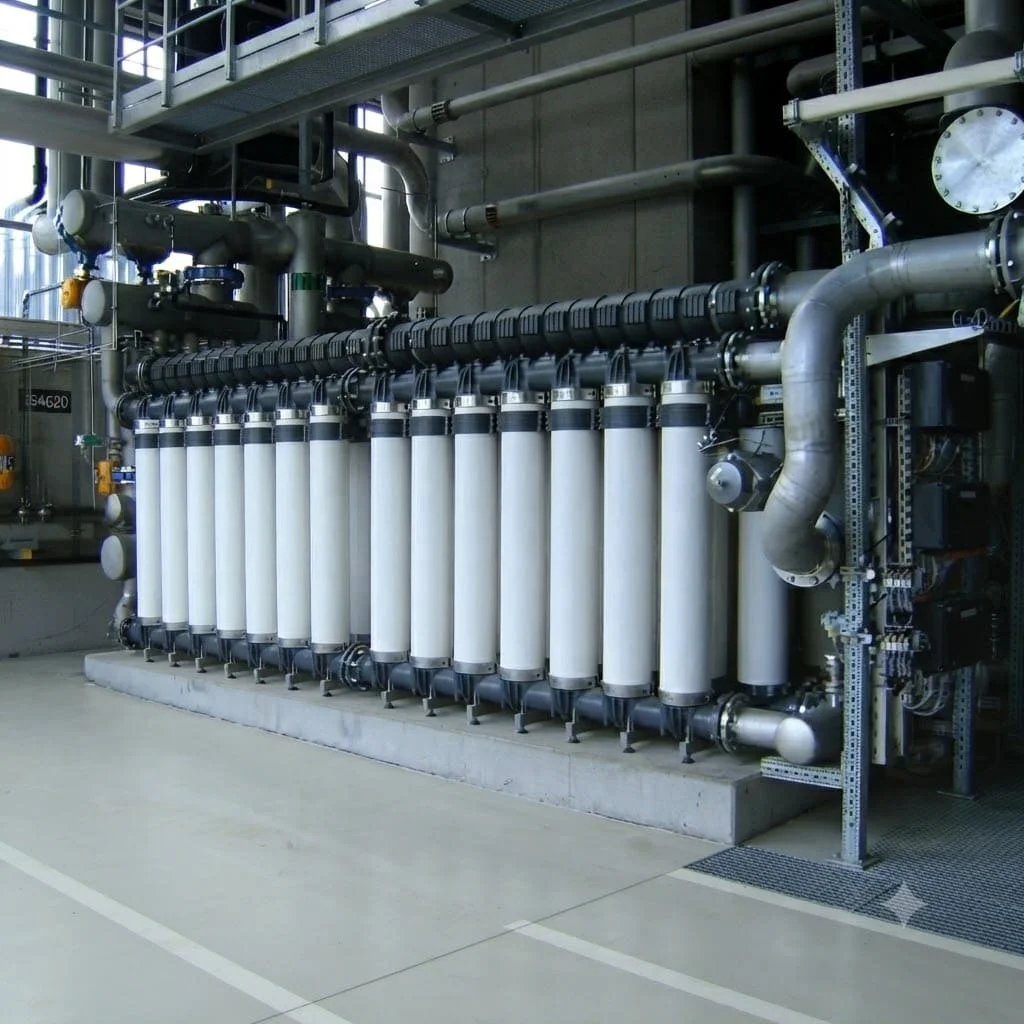


SHREE WATER TECH is a leading Ultrafiltration Plant Manufacturer, Supplier and Exporter based in Pune. An Ultrafiltration Plant (UF Plant) is a membrane-based water treatment system used to remove suspended solids, colloids, microorganisms, bacteria, and other larger contaminants from water. Ultrafiltration uses a semi-permeable membrane as a physical separation barrier and is widely applied in drinking-water treatment, industrial wastewater treatment, water reuse, and reverse osmosis pretreatment.
Unlike reverse osmosis, UF primarily targets suspended and particulate contaminants rather than dissolved salts. This makes it useful as a clarification and filtration technology where turbidity and microbial contamination need to be controlled.
UF systems can be configured for domestic, commercial, industrial, municipal, and specialized applications, including milk and food-processing operations. Learn more about us.
What is an Ultrafiltration Plant?
An Ultrafiltration Plant is a water treatment system that uses ultrafiltration membranes to separate fine suspended particles, colloids, bacteria, and other macromolecular contaminants from water.
The membrane contains extremely small pores that allow water and smaller dissolved substances to pass through while retaining larger particles and microorganisms. The filtered water is called permeate, while the retained material forms the concentrate or reject stream.
UF is often selected when the primary objective is water clarification, turbidity reduction, suspended-solids removal, or microbial separation.
It can also serve as a pretreatment system for RO plants, reducing the particulate load reaching downstream RO membranes.
How Does an Ultrafiltration Plant Work?
As Ultrafiltration Plant Manufacturers, Suppliers and Exporters based in Pune, a UF Plant we supply works by forcing feed water through specialized membrane modules under controlled pressure.
1. Feed Water Entry
Raw water enters the system through a feed pump or pressurized supply line. Depending on its quality, preliminary screening or filtration may be provided.
2. Pretreatment
Pretreatment can include screening, multimedia filtration, cartridge filtration, or other processes required to protect the UF membranes from excessive fouling.
3. Membrane Filtration
The pressurized feed flows across or through the UF membrane. Water and smaller dissolved substances pass through the membrane, while suspended particles, colloids, bacteria, and larger contaminants are retained.
4. Permeate Collection
The filtered water collected from the membrane is known as permeate. It can be sent directly to a storage tank, disinfection stage, industrial process, or downstream RO system.
5. Backwashing
During operation, retained contaminants accumulate on the membrane surface. Periodic backwashing reverses the water flow to remove accumulated material and restore filtration performance.
6. Chemical Cleaning
When physical cleaning is insufficient, chemical cleaning can be performed according to membrane-material compatibility and the nature of the fouling.
Types of Ultrafiltration Plants
As leading Ultrafiltration Plant Manufacturers in Pune, our UF Plant types are designed to meet different application requirements and industry standards, including the following:
- Drinking Water UF Plant: A Drinking Water UF Plant is used to reduce turbidity, suspended solids, colloids, and microorganisms from suitable raw-water sources. Additional disinfection and treatment may be required depending on the source and final water-quality requirements.
- Municipal UF Plant: Municipal UF systems can be used for surface-water clarification, potable-water pretreatment, and water-reuse applications.
- Industrial UF Plant: An Industrial Ultrafiltration Plant is designed for process-water treatment, wastewater polishing, recycling, and pretreatment for advanced membrane systems.
- Commercial UF Plant: Commercial systems are suitable for hotels, hospitals, institutions, food-processing facilities, and other applications requiring consistent filtered-water production.
- UF Plant for RO Pretreatment: UF is frequently integrated before RO to reduce suspended solids, turbidity, and colloidal loading. Effective pretreatment can help protect downstream RO membranes from fouling.
- Ultrafiltration System for Milk: An Ultrafiltration Machine for Milk uses membrane separation to selectively concentrate milk components. It can be used in dairy processing for applications such as protein concentration and fractionation.
- High-Flow UF Plant: High-flow systems are designed with multiple membrane modules operating in parallel to provide larger treatment volumes. The number and arrangement of modules depend on the required flow and feed-water characteristics.
Major Components of an Ultrafiltration Plant
A typical UF system supplied by our Pune-based team may contain:
- Raw-water feed tank
- Feed pump
- Pre-screening system
- Multimedia filter, where required
- Cartridge filter
- UF membrane modules
- Membrane housings
- Permeate tank
- Backwash pump
- Backwash storage arrangement
- Air-scouring system, where applicable
- Chemical dosing system
- Chemical cleaning system
- Pressure gauges
- Flow meters
- Turbidity monitoring
- Transmembrane pressure monitoring
- Automated valves
- Electrical control panel
- PLC automation system
- Concentrate and drain connections
The equipment arrangement is selected according to membrane technology, water quality, operating mode, and required automation.
Technical Specifications of Ultrafiltration Plant
As a trusted Ultrafiltration Plant Supplier in Pune, we serve businesses across various industries that meet professional treatment requirements.
| Category | Technical Parameter | Specification | Unit | Typical Value / Range |
|---|---|---|---|---|
| Capacity | Plant Capacity | 500–100,000 | LPH | 500 / 1,000 / 5,000 / 10,000 / 25,000 / 50,000 / 100,000 |
| Flow | Feed Flow Rate | 0.5–100 | m³/hr | Capacity dependent |
| Technology | Filtration Process | Ultrafiltration | — | Membrane separation |
| Membrane | Membrane Type | Hollow Fibre / Tubular | — | Application dependent |
| Membrane | Membrane Material | PVDF / PES | — | Chemical and application dependent |
| Membrane | Membrane Configuration | Inside-Out / Outside-In | — | Module dependent |
| Chemical Cleaning | CIP Duration | 1–4 | hours | Fouling dependent |
| Chemical Cleaning | Cleaning pH | 2–12 | pH | Chemical/membrane dependent |
| Pump | Feed Pump Flow | 0.5–100 | m³/hr | System dependent |
| Application | Feed Source | Surface / Ground / Municipal / Wastewater | — | Pretreatment dependent |
| Application | End Use | Drinking Water / RO Pretreatment / Industrial / Wastewater | — | Customized |
Features and Benefits of Ultrafiltration Plant
As Ultrafiltration Plant Exporters in Pune, our products provide several features and benefits including consistent quality, smooth finish, and long service life.
| Category | Feature | Benefit |
|---|---|---|
| Membrane Filtration | Fine UF membrane barrier | Removes suspended and colloidal contaminants |
| Clarification | High-efficiency separation | Provides improved water clarity |
| Microbial Control | Physical membrane separation | Helps remove bacteria and many microorganisms |
| Pretreatment | RO-compatible configuration | Reduces particulate loading on RO membranes |
| Operation | Automatic backwashing | Helps maintain membrane performance |
| Energy | Relatively low-pressure operation | Can reduce energy demand compared with pressure-intensive desalination processes |
| Design | Compact modular configuration | Provides installation flexibility |
| Cleaning | Backwash and CIP capability | Supports membrane service life |
| Recovery | Reuse-oriented configuration | Supports water recovery applications |
| Automation | PLC-controlled operation | Simplifies monitoring and process control |
Applications of Ultrafiltration Plant
As Ultrafiltration Plant Manufacturers in Pune, our UF systems are used across various industrial sectors such as:
- Drinking & Municipal Water Treatment: Ultrafiltration Plants are used for treating surface water, groundwater, and municipal water by removing turbidity, suspended solids, colloids, and microorganisms. UF provides consistent filtration performance and can be used as an alternative or polishing stage to conventional clarification.
- Industrial Water Treatment: UF systems are used in pharmaceutical, chemical, textile, food, beverage, dairy, and manufacturing industries for process-water and utility-water treatment. They provide reliable separation of fine particles and macromolecular contaminants from industrial water streams.
- RO Pretreatment: UF is widely installed as a pretreatment system for Reverse Osmosis Plants to reduce suspended solids, colloids, turbidity, and fouling potential. This helps provide a cleaner and more stable feed to downstream RO membranes.
- Wastewater Treatment: UF technology is used for treating industrial and municipal wastewater after suitable primary or biological treatment. It provides membrane-based separation of fine suspended solids and colloidal contaminants from treated wastewater.
- Water Recycling & Reuse: UF systems can be integrated into wastewater recycling and water-reuse plants to produce a suitable feed for further purification. The treated permeate can be directed to RO or other advanced treatment systems for selected reuse applications.
- Food & Dairy Processing: UF is used in the food and dairy industries for both water treatment and specialized membrane separation applications. Typical applications include milk concentration, protein separation, whey processing, and process-water purification.
- Pharmaceutical & Healthcare: Pharmaceutical companies, hospitals, laboratories, and healthcare facilities use UF for specialized water purification and filtration requirements. UF can be combined with RO, UV, and other treatment technologies according to the required water quality.
- Textile & Chemical Industries: UF systems are applied to selected textile and chemical wastewater streams containing dyes, colloids, suspended solids, and high-molecular-weight compounds. The technology can also support water-recovery and recycling processes.
- Power & Utility Plants: UF is used as a pretreatment stage for RO and demineralization systems in power plants and utility facilities. It helps reduce particulate and colloidal loading before downstream membrane or polishing treatment.
- Commercial & Institutional Applications: Hotels, resorts, offices, schools, colleges, and other commercial facilities use compact UF systems for water filtration and selected reuse applications. The systems can be configured according to site conditions, water demand, and required treated-water quality.
- Industrial Water Recovery & ZLD: UF can be incorporated into water-recovery and Zero Liquid Discharge (ZLD) systems as a pretreatment stage before RO and concentration processes. It helps protect downstream equipment by reducing suspended and colloidal contaminants.
Ultrafiltration Plant Capacity
UF Plant capacity is selected according to required permeate production, feed-water quality, operating hours, membrane flux, recovery, and the characteristics of the contaminants.
Capacity can range from relatively small systems for domestic or commercial applications to high-flow industrial and municipal installations using multiple membrane modules.
The final membrane area is determined using design parameters such as feed flow, permeate flux, recovery, operating pressure, temperature, and expected fouling rate.
For industrial projects, capacity should therefore be calculated from actual water demand and membrane-design conditions rather than selecting equipment only by nominal flow.
UF vs. RO: Which is better?
Neither UF nor RO is universally better because the two technologies perform different treatment functions.
UF is generally preferred when the main requirements are suspended-solids removal, turbidity reduction, colloid separation, and microbial removal.
RO is preferred when significant reduction of dissolved salts, TDS, and many dissolved contaminants is required.
UF typically operates at lower pressure and can be an effective pretreatment stage before RO.
Can Ultrafiltration Remove TDS?
UF does not generally provide significant TDS removal. Dissolved salts and other small dissolved substances can pass through UF membranes.
When substantial TDS reduction is required, technologies such as Reverse Osmosis (RO) are generally considered.
Factors to Consider When Selecting a UF Plant
Several parameters should be evaluated before selecting an ultrafiltration system.
- Feed-Water Quality: Analyze turbidity, TSS, SDI, organic matter, microorganisms, oil and grease, hardness, iron, manganese, and other contaminants relevant to the application.
- Required Permeate Quality: The desired quality of the treated water determines whether UF alone is sufficient or whether additional RO, NF, disinfection, or other treatment is necessary.
- Flow Requirement: The system should be sized for average and peak flow conditions to maintain reliable treatment performance.
- Membrane Selection: Membrane material, configuration, pore characteristics, chemical resistance, and operating conditions should match the application.
- Fouling Potential: Feed-water characteristics determine the pretreatment, cleaning frequency, and operating strategy required to control membrane fouling.
- Automation: Automatic systems can control filtration, backwashing, chemical cleaning, and alarms with reduced manual intervention.
- Space Availability: Compact and modular arrangements can be considered where installation space is limited.
Ultrafiltration Plant Cost
The cost of an Ultrafiltration Plant depends on treatment capacity, membrane type, membrane area, pretreatment requirements, automation, construction materials, instrumentation, and installation scope.
A small commercial UF system requires considerably different equipment from a large industrial or municipal installation.
The total project cost may include membrane modules, pressure vessels, pumps, pretreatment filters, backwash equipment, chemical dosing, control panels, instrumentation, piping, tanks, installation, and commissioning.
Operating expenses can include electricity, membrane cleaning chemicals, replacement filters, membrane replacement, and wastewater or concentrate management.
UF Plant Installation & Maintenance
UF installation requires appropriate space for membrane modules, pumps, pretreatment equipment, control panels, chemical systems, storage tanks, and drainage arrangements.
Before commissioning, all piping, valves, electrical connections, instruments, and membrane modules should be inspected and tested.
Routine maintenance includes:
- Monitoring transmembrane pressure
- Checking permeate flow
- Monitoring feed and outlet turbidity
- Performing scheduled backwashing
- Inspecting automatic valves
- Cleaning membrane modules
- Replacing cartridge filters
- Checking pumps
- Monitoring chemical-cleaning systems
- Calibrating instruments
- Inspecting piping for leakage
A consistent cleaning and monitoring program helps maintain stable filtration performance.
Why Choose Us?
As high-quality Ultrafiltration Plant Manufacturers, Suppliers and Exporters based in Pune, we stand out by delivering premium solutions. Here's why:
- Customized UF Plant Solutions: We design Ultrafiltration Plant systems according to feed-water quality, flow requirements, treatment objectives, and available installation space. Our solutions are suitable for domestic, commercial, industrial, municipal, and wastewater applications.
- Advanced Membrane Filtration: Our UF systems use advanced membrane technology for effective removal of suspended solids, colloids, turbidity, bacteria, and fine particulate matter. The system can be configured for high-efficiency clarification and water purification.
- Optimized RO Pretreatment: UF technology provides an effective pretreatment stage for Reverse Osmosis (RO) systems by reducing turbidity, suspended solids, and membrane-fouling contaminants. This helps improve downstream RO performance and membrane operating stability.
- Water Recovery & Reuse: We develop UF systems for water recovery, recycling, and reuse applications, helping industries reduce freshwater consumption and improve overall water efficiency. Treated water can be integrated into suitable secondary or tertiary treatment systems.
- Flexible System Integration: Our Ultrafiltration Plants can be integrated with RO, NF, softening, disinfection, activated carbon filtration, and other treatment technologies. This allows complete multi-stage treatment systems to be developed for specific water-quality requirements.
Choose Shree Water Tech, a well-known Ultrafiltration Plant Manufacturer, Supplier and Exporter based in Pune. An Ultrafiltration Plant is an effective membrane filtration technology for reducing suspended solids, colloids, turbidity, bacteria, and other larger contaminants from water. Its relatively low-pressure operation and ability to provide consistent clarification make UF useful for drinking-water treatment, industrial wastewater treatment, water reuse, and RO pretreatment. UF should not be selected as a direct replacement for RO when the primary objective is significant dissolved-salt or TDS reduction. Instead, the two technologies can complement each other in integrated water-treatment systems. Contact us today for a customized UF Plant solution, water-quality assessment, technical consultation, and project quotation.
FAQ's
An Ultrafiltration Plant is a membrane-based water-treatment system that uses fine membranes to remove suspended solids, colloids, bacteria, and other larger contaminants from water.
The cost depends on capacity, membrane type, pretreatment, automation, construction material, instrumentation, installation, and application-specific requirements.
It depends on the treatment objective. UF is suitable for turbidity, suspended solids, colloids, and microbial separation, while RO is generally selected when dissolved salts and TDS need substantial reduction.
UF is not universally better than RO. UF and RO perform different separation functions and are sometimes used together in a complete water-treatment system.
UF generally does not significantly remove dissolved salts or TDS because many dissolved substances are small enough to pass through the membrane.