Top Containerized Sewage Treatment Plant Manufacturers in Goa | Shree Water Tech
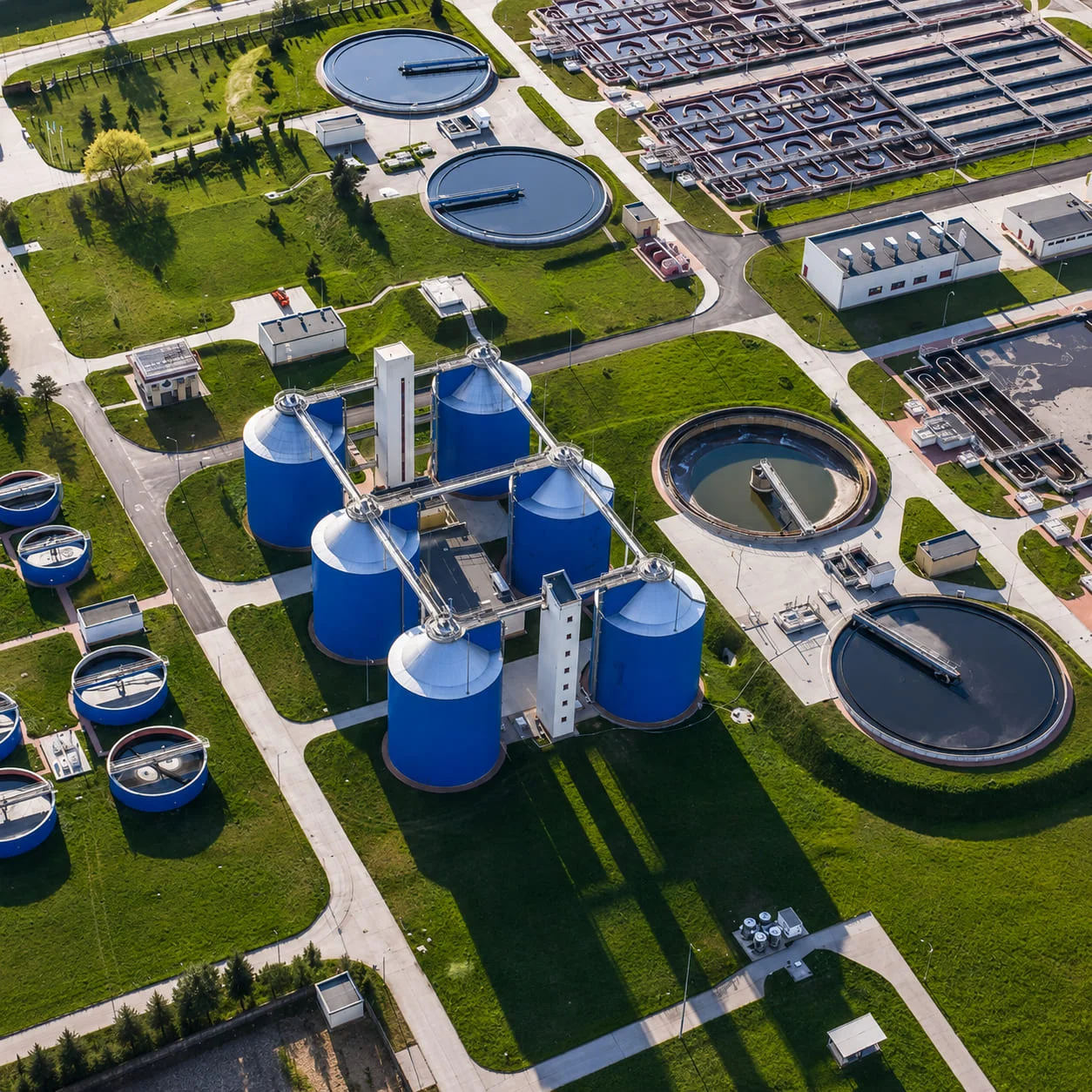


SHREE WATER TECH is leading Containerized Sewage Treatment Plant Manufacturers, Suppliers and Exporters in India. A Containerized Sewage Treatment Plant (STP) is a compact, pre-engineered wastewater treatment system installed within a standard shipping container. It combines essential treatment equipment into a factory-assembled configuration that can be transported and installed at locations where conventional civil construction may be difficult, time-consuming, or space-intensive.
These systems are designed for treating domestic sewage generated by residential developments, commercial facilities, hotels, hospitals, construction sites, industrial campuses, infrastructure projects, and temporary facilities.
A containerized design provides a practical combination of compact construction, faster deployment, modular expansion, controlled manufacturing, and relocation capability.
What is a Containerized Sewage Treatment Plant?
A Containerized Sewage Treatment Plant is a pre-engineered sewage treatment system housed inside a standard 20 ft or 40 ft ISO container, depending on the treatment configuration, equipment arrangement, and required capacity.
Instead of constructing every treatment unit separately at the project site, major process equipment can be assembled and integrated within the container. This can reduce site preparation requirements and simplify transportation and installation.
The system can incorporate technologies such as Moving Bed Biofilm Reactor (MBBR), Sequencing Batch Reactor (SBR), or Membrane Bioreactor (MBR) depending on the required treated-water quality and project conditions.
Containerized STPs are particularly useful where space is restricted, construction schedules are short, or the treatment system may need to be relocated in the future.
How Does a Containerized STP Work?
A containerized STP follows the same fundamental treatment principles as a conventional sewage treatment plant, but the process equipment is arranged within a compact modular structure.
- 1. Sewage Collection: Incoming sewage is collected from toilets, kitchens, bathrooms, and other domestic wastewater sources and transferred to the treatment system.
- 2. Preliminary Treatment: Screens or other preliminary equipment remove larger solids and floating materials that could interfere with downstream equipment.
- 3. Equalization: Where required, an equalization arrangement helps balance variations in wastewater flow and pollutant loading before biological treatment.
- 4. Biological Treatment: The wastewater enters the biological treatment section, where microorganisms break down biodegradable organic matter. Depending on the selected technology, biological treatment may use suspended biomass, attached-growth media, batch-cycle operation, or membrane separation.
- 5. Solid Separation: After biological treatment, biological solids are separated from the treated-water stream using a clarifier or membrane system.
- 6. Tertiary Treatment: Additional filtration or disinfection can be incorporated when higher-quality treated water is required for reuse or specific discharge conditions.
- 7. Treated Water and Sludge Handling: The treated water is directed toward reuse, storage, or discharge, while excess sludge is removed for appropriate handling and disposal.
Types of Containerized STP
As we are leading Containerized STP Manufacturers in India, our Types are designed to meet different application requirements and industry standards, including the following types:
- Modular Containerized STP: A Modular Containerized STP consists of standardized treatment modules arranged inside one or more containers. Additional modules can be incorporated where expansion or higher treatment capacity is required.
- Portable STP: A Portable STP is designed for applications where the treatment system may need to be transported between locations. It is suitable for temporary facilities, construction projects, camps, and other mobile applications.
- Mobile Sewage Treatment Plant: A Mobile Sewage Treatment Plant is designed with transportation and relocation in mind. Its configuration depends on the required treatment capacity, mobility requirements, and site conditions.
- Packaged STP: A Packaged Sewage Treatment Plant is a pre-engineered treatment system supplied as an integrated package. It reduces the amount of on-site process fabrication and can simplify project execution.
- Pre-Engineered STP: A Pre-Engineered STP is designed and manufactured according to predetermined engineering parameters before being delivered to the project site. This approach can improve installation efficiency and quality control.
- Skid-Mounted STP: A Skid-Mounted STP places major treatment equipment on a structural skid for easier transportation, positioning, and installation. It can be combined with containerized equipment depending on the project configuration.
Major Components of a Containerized STP
A typical containerized sewage treatment system may include:
- Sewage inlet arrangement
- Screening system
- Equalization tank or section
- Transfer pumps
- Biological treatment reactor
- MBBR media, where applicable
- Aeration blowers
- Fine-bubble diffusers
- Clarifier or membrane module
- Sludge return system
- Sludge handling arrangement
- Pressure Sand Filter
- Activated Carbon Filter
- Disinfection system
- Treated-water tank
- Electrical control panel
- PLC automation system
- Flow meters
- Pressure gauges
- Level sensors
- Air piping and valves
- Chemical dosing equipment, where required
The actual equipment list varies according to the selected treatment process and project requirements.
Technical Specifications of Containerized STP
As a trusted Containerized STP Suppliers in India, we serve businesses across various industries that meet professional visual communication requirements.
| Category | Technical Parameter | Specification | Unit | Typical Value / Range |
|---|---|---|---|---|
| Design | Plant Configuration | Containerized / Modular | — | 20 ft / 40 ft |
| Pretreatment | Bar Screen | Screen Opening | mm | 5–20 |
| Pretreatment | Grit Chamber | Particle Removal | mm | 0.5–2 |
| Equalization | Equalization HRT | Hydraulic Retention | hr | 2–8 |
| Biological | Process Technology | Biological Treatment | — | MBBR / SBR / MBR |
| Biological | MLSS | Mixed Liquor Concentration | mg/L | 2,000–5,000 |
| Biological | DO | Dissolved Oxygen | mg/L | 1.5–3.0 |
| Biological | F/M Ratio | Organic Loading | kg BOD/kg MLSS•day | 0.10–0.30 |
| Biological | Aeration HRT | Biological Retention | hr | 4–12 |
| MBR | Membrane Type | Membrane Module | — | Hollow Fibre / Flat Sheet |
| MBR | Membrane Pore Size | UF Membrane | micron | 0.01–0.1 |
| Clarification | Secondary Clarifier | Surface Loading | m³/m²/day | 15–30 |
| Filtration | Pressure Sand Filter | Filtration Rate | m³/m²/hr | 5–15 |
| Filtration | Activated Carbon Filter | Filtration Rate | m³/m²/hr | 5–12 |
| Operation | Treatment Mode | Process Operation | — | Continuous / Batch |
| Mobility | Relocation | Deployment Capability | — | Portable / Relocatable |
| Effluent | Treated Water | Final Use | — | Reuse / Irrigation / Discharge |
Features and Benefits of Containerized STP
As Containerized STP Exporters in India, our products provide several Features and Benefits including consistent quality, smooth finish, and long service life.
| Category | Feature | Benefit |
|---|---|---|
| Design | Compact containerized construction | Reduces space requirements |
| Manufacturing | Factory-assembled equipment | Improves installation consistency |
| Deployment | Pre-engineered configuration | Supports faster project execution |
| Mobility | Relocatable design | Suitable for temporary or changing sites |
| Installation | Reduced on-site fabrication | Simplifies site work |
| Modularity | Expandable configuration | Supports future capacity requirements |
| Construction | Enclosed equipment arrangement | Provides organized equipment housing |
| Automation | PLC-based control | Simplifies operation and monitoring |
| Application | Flexible configuration | Suitable for multiple sectors |
| Maintenance | Accessible equipment layout | Facilitates servicing |
Applications of Containerized Sewage Treatment Plant
As Containerized Sewage Treatment Plant Manufacturers in India, our all types are used in various types of industrial sectors such as:
- Residential Real Estate Industry: Used for apartment complexes, housing developments, residential communities, and other real-estate projects.
- Commercial Real Estate Industry: Suitable for commercial buildings, business parks, shopping facilities, and mixed-use developments.
- Hospitality Industry: Hotels, resorts, guest facilities, and tourism properties can use containerized systems where space and installation time are important considerations.
- Healthcare Industry: Hospitals, clinics, healthcare campuses, and medical facilities can deploy suitable sewage-treatment systems according to their wastewater characteristics and regulatory requirements.
- Education Sector: Schools, colleges, universities, hostels, and campus facilities can use compact treatment systems for domestic sewage management.
- IT & ITES Industry: Office campuses and technology parks can use modular STPs for treating wastewater generated by employees and facility operations.
- Manufacturing Industry: Industrial campuses requiring treatment of domestic sewage separately from process effluent can use containerized domestic wastewater treatment systems.
- Infrastructure and Construction: Construction projects, temporary worker facilities, infrastructure sites, and remote project locations can benefit from portable or relocatable treatment configurations.
- Public Sector and Government Infrastructure: Government facilities, public buildings, transportation infrastructure, and temporary installations can use pre-engineered sewage-treatment systems.
- Oil & Gas and Mining: Remote camps and support facilities in oil, gas, and mining operations can use containerized systems where conventional infrastructure is difficult to establish.
- Industrial Parks and SEZs: Containerized systems can provide decentralized treatment for specific buildings, facilities, or project phases within larger developments.
Containerized STP Capacity
The required capacity of a containerized STP is determined from the expected sewage generation rather than the container dimensions alone.
Important sizing parameters include:
- Number of users
- Average daily sewage generation
- Peak flow
- Operating hours
- Organic loading
- Hydraulic retention requirements
- Treated-water quality
- Future expansion
- Available installation space
For multi-phase developments, the system can be configured using multiple treatment modules or containers where the design allows expansion. Capacity should be established using actual wastewater-generation data and appropriate design margins.
Factors to Consider When Selecting a Containerized STP
- Wastewater Characteristics: Analyze parameters such as BOD, COD, TSS, pH, flow rate, temperature, and organic loading before selecting the treatment technology.
- Available Space: The site should accommodate the container, access area, piping, electrical connections, inlet arrangement, treated-water outlet, and sludge-handling facilities.
- Treatment Technology: MBBR, SBR, MBR, or another process should be selected according to the required water quality, space limitations, operating conditions, and project objectives.
- Installation Conditions: Consider foundation requirements, crane access, transportation routes, drainage, electrical supply, and connection points.
- Future Expansion: If the wastewater flow is expected to increase, a modular configuration may provide greater flexibility for future expansion.
- Automation: Automatic control systems can simplify equipment sequencing, alarms, monitoring, and routine operation.
Containerized STP Cost
The cost of a Containerized Sewage Treatment Plant depends on treatment capacity, selected technology, container configuration, equipment specifications, automation, construction materials, filtration requirements, installation conditions, and project scope.
A system using MBR technology, for example, can have a different equipment configuration from an MBBR or SBR-based plant.
Project cost may include:
- Container structure
- Treatment tanks and equipment
- Pumps
- Blowers
- Biological treatment system
- Clarifier or membranes
- Filters
- Disinfection equipment
- Electrical panel
- PLC automation
- Piping and valves
- Instrumentation
- Transportation
- Installation
- Commissioning
Operating expenses should also be evaluated, including electricity, chemicals, membrane or filter maintenance where applicable, sludge handling, and periodic servicing.
Containerized STP Installation & Maintenance
Installation typically begins with site preparation and positioning of the container on a suitable foundation or support structure. The sewage inlet, treated-water outlet, electrical supply, ventilation, drainage, and other required connections are then established. After installation, pumps, blowers, control systems, instruments, and process equipment are tested before commissioning.
Routine maintenance includes:
- Cleaning screens
- Checking pumps
- Inspecting blowers
- Monitoring aeration
- Checking biological-process parameters
- Inspecting valves and piping
- Cleaning filters
- Monitoring treated-water quality
- Removing excess sludge
- Checking control panels
- Calibrating instruments
- Inspecting container ventilation and corrosion protection
A preventive maintenance schedule helps maintain stable operation and reduces unexpected downtime.
Why Choose Our Containerized Sewage Treatment Plant?
- Customized Containerized STP Solutions: We design Containerized Sewage Treatment Plants according to wastewater characteristics, treatment capacity, site conditions, and project requirements. Each system is configured for efficient installation and reliable operation.
- Compact & Space-Efficient Design: Our containerized STP systems integrate major treatment equipment within 20 ft or 40 ft containers, making them suitable for locations with limited space. The compact configuration also simplifies transportation and deployment.
- Advanced Treatment Technologies: Depending on the application, systems can incorporate MBBR, SBR, MBR, filtration, and disinfection technologies. The treatment process is selected according to required treated-water quality and operational requirements.
- Factory-Built & Pre-Engineered: Major components are assembled and tested under controlled manufacturing conditions before dispatch. This helps reduce site fabrication work and supports faster installation and commissioning.
- Flexible Application Configuration: Our containerized systems can be configured for residential, commercial, hospitality, healthcare, construction, infrastructure, industrial, and remote locations. Modular arrangements can also be developed for changing project requirements.
SHREE WATER TECH is leading Containerized Sewage Treatment Plant Manufacturers, Suppliers and Exporters in India. A Containerized Sewage Treatment Plant provides a practical alternative to conventional site-built sewage treatment systems where compactness, faster deployment, modularity, or relocation capability is important. By integrating treatment equipment within a pre-engineered containerized arrangement, these systems can simplify transportation, installation, and project execution. Depending on wastewater characteristics and treated-water requirements, technologies such as MBBR, SBR, or MBR can be incorporated. Contact us today for a customized Containerized STP solution, technical consultation, site assessment, and project quotation.
FAQ's
A Containerized Sewage Treatment Plant is a pre-engineered wastewater treatment system installed within a standard shipping container. It is designed to provide compact and deployable sewage treatment.
Containerized STPs can be configured inside 20 ft or 40 ft ISO containers, depending on the equipment arrangement and project requirements.
Depending on the application, containerized systems can use MBBR, SBR, MBR, or other suitable biological and polishing treatment technologies.
Major advantages include compact construction, factory assembly, simplified installation, reduced site fabrication, portability, modularity, and suitability for locations with limited space.
They can be used in residential developments, commercial buildings, hotels, hospitals, educational campuses, construction projects, remote facilities, infrastructure projects, industrial sites, mining operations, and temporary facilities.